

24-Hour Arrival Guarantee
Get Fast Aircond Service, WhatsApp Us And Book In Just 5 Minutes

Professional Service
CIDB Certified Technicians

No Hidden Costs
Clear Transparent Pricing

Cheapest Aircond Service
Insanely Iow Prices For Aircond Installation And Servicing In Malaysia
Guaranteed Arrival Within 24 Hours!
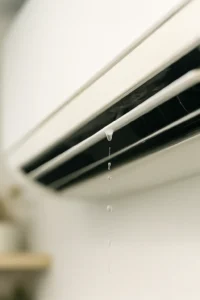
Aircond Leaking Water
Aircond Is Running But Not Cold
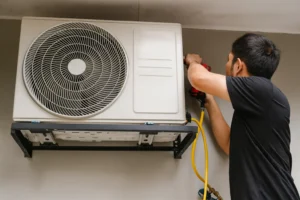
Noisy Compressor, Not Running
Not Cold? Get the Cheapest Aircond Installation & Aircond Service in Malaysia!
The most value-for-money aircond installation and servicing in Malaysia. 4-Hour Express Service.
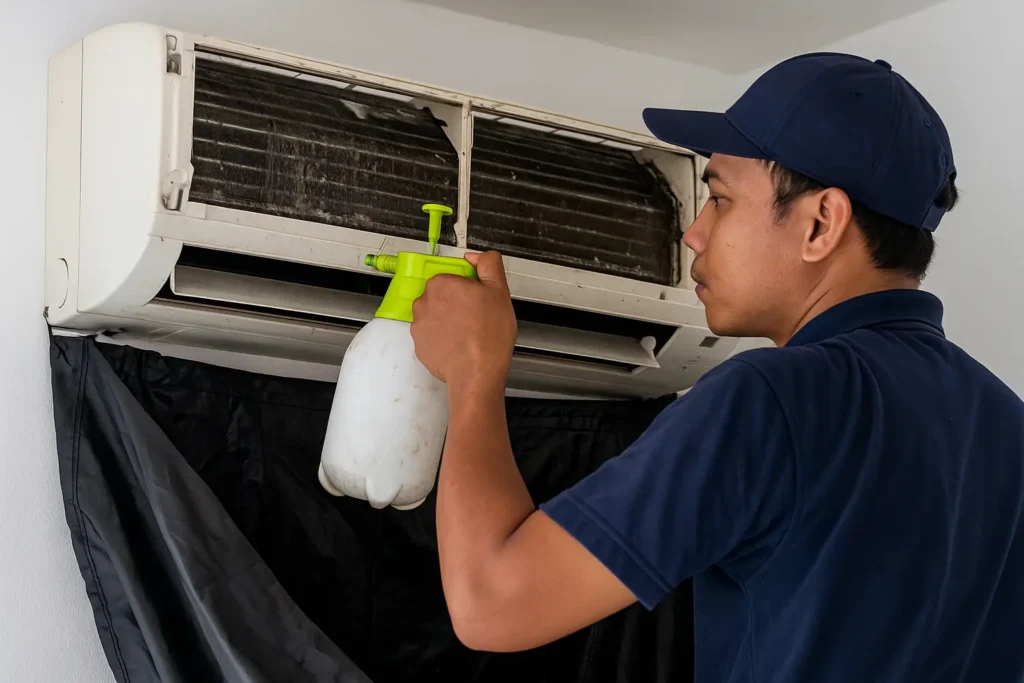
Aircond Service Malaysia
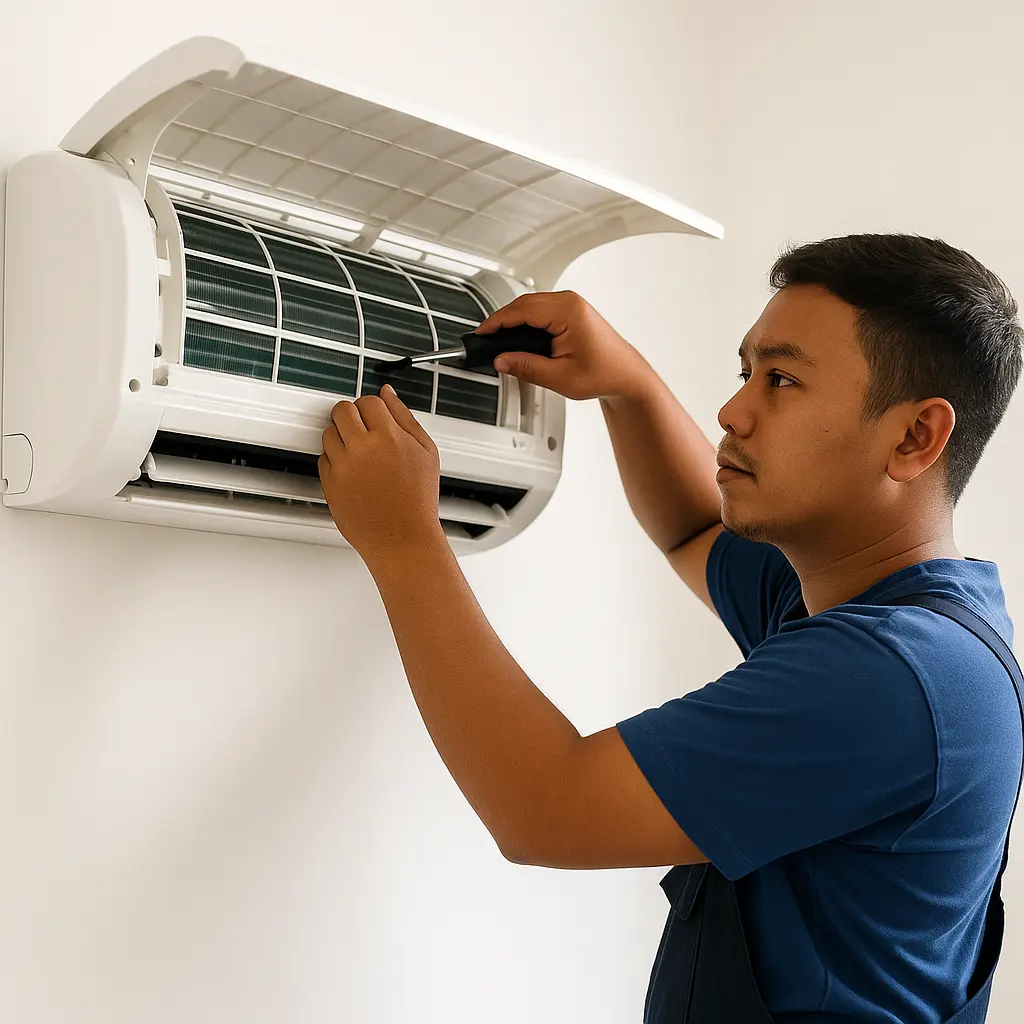
Aircond Installation Malaysia
Free 10 feet of copper pipe
Other Aircond Services Malaysia
4-Hour Express Aircond Installation & Service Malaysia. Same-day service available
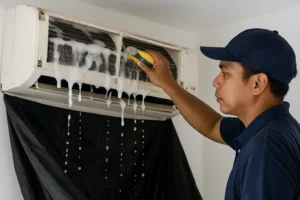
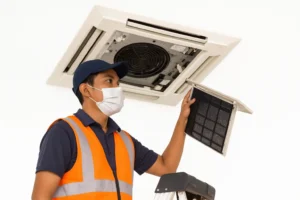
Signs Your Aircond Needs Servicing Before It Breaks Down
Direct answer
If you notice weak airflow, longer cooling time, bad smells, water leaks, unusual noises, icing on pipes, or “16°C but still warm,” your aircond likely needs servicing before a bigger failure happens. Early action usually prevents compressor strain, avoids sudden breakdowns (often at night), and keeps humidity under control in Malaysia’s weather.
Quick answer
Most breakdowns don’t start as “suddenly dead.” They start as small warnings: your room takes longer to cool, the air feels damp, or the unit sounds different. In condos, this often shows up after heavy night use, renovation dust, or during humid months when the system works harder.
Servicing isn’t always “chemical wash.” Sometimes it’s cleaning filters, checking gas pressure trends, clearing drainage, tightening loose parts, and confirming the fan and sensors are behaving normally—before they drag the whole system down. see what a proper service covers
If the symptom is new and getting worse week by week, treat it as a “service now” sign, not a “later” task.
Soft CTA near top
If you want a fast, practical direction: WhatsApp your symptom(s) + unit type (wall-mounted/inverter) + how long the problem has been happening. Or call if the leak/noise is urgent.
Why local expertise matters in Malaysia
Airconds in Malaysia face a specific mix: high humidity, condo dust, haze seasons, and frequent night use in bedrooms. A local-minded technician doesn’t just “clean and go”—they’ll pay attention to drainage gradients (condo piping), mold risk from damp coils, and airflow restrictions caused by renovation dust. That’s how you prevent repeat issues like leaking, musty smell, and “not cold after servicing.”
Service overview: what it is and who it’s for
This support page is for homeowners and small offices who want to catch warning signs early—before the unit trips, leaks badly, freezes up, or stops cooling during peak heat.
It’s especially relevant if:
- Your aircond runs long hours at night
- You’ve had recent renovation or haze exposure
- You notice comfort dropping even though settings haven’t changed
- You want preventive maintenance, not just emergency repair
Types of services (quick overview)

Depending on symptoms, technicians usually choose from:
- Basic servicing: filter clean, airflow check, drain check, general inspection
- Chemical wash (targeted): deeper coil/blower cleaning when blockage, smell, or icing suggests it
- Troubleshooting visit: focused diagnosis for recurring leaks, noise, sensor issues, or “not cold” cases
Step-by-step: what a tech checks for these symptoms

- Confirm cooling performance and temperature drop (real-world check, not just remote settings)
- Inspect filters, blower, and coil condition (dust/mold buildup patterns)
- Check drainage flow, tray condition, and possible blockage points
- Observe indoor/outdoor fan operation and unusual vibration/noise sources
- Review likely causes (maintenance vs parts vs installation issues) and recommend next step
What’s included / not included
Usually included (symptom-based checks)
- Basic inspection tied to your complaint (not cold, leak, smell, noise, slow cooling)
- Airflow assessment (vents, filter condition, blower output)
- Drainage check (blockage, overflow risk, drip patterns)
- Visual coil condition check (dust/mold signs)
- Simple tightening and minor alignment if safe (loose panels/rattles)
Usually NOT included (unless agreed upfront)
- Full deep cleaning of every component if heavy buildup is found
- Parts replacement (capacitor, fan motor, PCB, etc.) without approval
- Major piping/installation rerouting work
- “Guaranteed fix” without diagnosing root cause (symptoms can overlap)
Frequency guidance: when to act based on signs
Service ASAP (don’t wait)
Leaking water, burning/electrical smell, loud new noises, repeated tripping, icing/freezing, or “set low but still warm” getting worse.
Service soon (next 1–2 weeks)
Takes long to cool, weak airflow, musty smell at startup, humidity feels higher than usual.
Monitor + plan
Slightly reduced cooling after haze/renovation dust—clean filters now, then book a check if performance doesn’t recover.
Bedroom units that run nightly often show early signs faster than living-room units. Small offices with long daytime runtime may see airflow drop and higher bills earlier.
Cost factors (no exact prices) + fair quote checklist
Costs vary by unit condition, access (condo height/placement), severity of buildup, and whether it’s diagnosis-only vs deep cleaning.
What a fair quote should clearly state
- Which unit(s) are included (number of indoor units + outdoor unit check if needed)
- Whether it’s basic service vs chemical wash vs troubleshooting
- What symptoms the visit covers (e.g., leak + not cold)
- Any parts are optional and only with approval
- After-service expectations (what should improve, and what needs follow-up)
Common warning signs and what usually helps
1) Not cold even at 16°C (remote set low but still warm)
What it often points to: dirty filters/coils reducing heat transfer, airflow restriction (blower clogged, vents blocked), gas-related issue or system imbalance (not always “just top up”), or sensor/thermostat reading issues.
What usually helps: start with filter and airflow checks; if airflow is weak or coil looks clogged, servicing/deeper cleaning may be needed; if cooling fades after a short while, diagnosis is important before any refill decision.
2) Takes long to cool
Common causes: gradual dust buildup on coil/blower, undersized unit for the room or new heat load, door gaps or humid air entering (especially in condos).
What usually helps: cleaning + airflow restoration; simple habit fixes; if it’s a new problem, treat it as a warning sign, not “normal aging.”
3) Weak airflow
What it often means: filter clogged (very common after haze or renovation dust), blower wheel buildup, coil blockage limiting air passage.
What usually helps: filter cleaning first; if airflow is still weak after that, schedule a service check.
4) Leaking water (dripping from indoor unit)
Typical reasons: drain pipe partial blockage, drain tray overflow from dirt, installation slope/drain routing issues (common in some condo setups).
What usually helps: clear blockage + verify drain flow; check tray condition; if it returns, root cause may be drainage routing or recurring buildup.
5) Bad smell after turning on (musty/sour)
Often points to: mold/mildew on coil or blower from constant humidity, stagnant water in tray/drain line.
What usually helps: cleaning targeted at mold-prone surfaces; improve drainage and drying patterns.
6) Making noise when running
Common noise types and meaning: rattling (loose panels/brackets), buzzing (electrical or fan-related), hissing (can be airflow, but new persistent hiss should be checked).
What usually helps: tighten/realign panels and mounts; inspect fan condition and vibration points; if sudden and loud, stop using and call.
7) Ice on pipe / freezing
What it often indicates: low airflow, coil blockage, possible system issue that needs diagnosis.
What usually helps: turn off to thaw; book servicing focused on airflow and coil condition; don’t force it to run.
8) Electricity bill higher but comfort worse
Often due to: unit running longer to reach temperature because efficiency dropped, dirty components, fan/compressor working harder.
What usually helps: restore airflow/coil condition; confirm performance after servicing; if bill stays high, consider deeper diagnosis.
Decision Tree: What to do if… (IF/THEN)
- IF your aircond is leaking water, THEN stop using it if dripping is heavy, place a container/towel, and book a drain check.
- IF it’s not cold even at 16°C, THEN clean filters first; if no improvement in 24–48 hours, book a symptom-based service check.
- IF you see ice on pipes/coils, THEN turn the unit off to thaw and avoid overflow; book servicing before running it again.
- IF there’s a musty smell at startup, THEN avoid masking it; book cleaning aimed at coil/blower + drainage hygiene.
- IF you hear a new loud noise, THEN stop and call—continuing can worsen damage.
- IF cooling is okay but takes longer, THEN schedule service soon—this is a common “before breakdown” stage.
- IF your bill jumps and comfort drops, THEN check filters + book a performance check; don’t assume it’s “normal.”
Mistakes to avoid (symptom-specific)
- Treating “top up gas” as the first move for every not-cold complaint.
- Ignoring small leaks (especially in condos).
- Running the unit while it’s freezing/iced.
- Masking bad smells instead of cleaning the source.
- Waiting for total breakdown before acting.
Pre & post checklist (symptom-related)
Before the visit
- Note the exact symptom(s) + when it happens (after 30 mins? only at night?)
- Take a quick photo/video of leaking, icing, or noises (if safe)
- Share unit type (inverter/non-inverter) and approximate room size
After the visit
Confirm airflow feels stronger and cooling time improves
Check for any drip within the next 24 hours (especially after long runtime)
If smell remains, ask what component likely holds the odor source
Watch whether the unit still freezes after a long session
Keep filters clean if haze/renovation dust continues
FAQs
If it’s a light occasional drip, you might manage short-term, but leaks often worsen. Heavy dripping can cause damage and may indicate blockage or overflow—better to stop and book a check.
A low set temperature doesn’t guarantee colder air if airflow is restricted or the coil can’t transfer heat well. Dirty filters/coils and airflow issues are common starting points; diagnosis helps avoid guessing.
Servicing-related signs often involve airflow drop, slow cooling, mild smell, or early leaks. Repair-related signs lean toward repeated tripping, persistent loud buzzing, or cooling that collapses quickly despite clean airflow.
Not always. Filters are the easiest check, but blower wheel buildup and coil blockage can also reduce airflow—especially after haze or renovation dust.
Freezing often happens when airflow is too low or the coil is blocked. It can also point to system issues, so it’s a “stop and check” sign, not something to ignore.
Yes, that pattern commonly points to dampness/mold on coil or blower surfaces. In Malaysia’s humidity, it tends to get worse if left alone.
Usually reduced efficiency—dust buildup, airflow restriction, or higher heat load in the room. It’s a classic early warning sign before bigger failures.
Yes. When efficiency drops, the system runs longer to hit the same comfort level. Servicing that restores airflow and heat transfer often improves runtime.
When symptoms suggest deeper blockage or odor sources—persistent musty smell, recurring freezing, heavy dust buildup, or repeated performance drop soon after basic cleaning. A tech should confirm based on condition.
Often, but not always. Drain routing/slope issues or recurring slime buildup can cause repeats. A proper check looks at flow, tray condition, and how the drain is set up.
Describe symptoms, when it happens, how long it has been occurring, and any recent triggers (haze, renovation dust, long night usage). Include unit type and number of units affected.
Comfort drops first, then the unit works harder, then issues stack—leaks worsen, freezing becomes frequent, or cooling fails during peak use. Early servicing is usually simpler than late-stage fixes.