
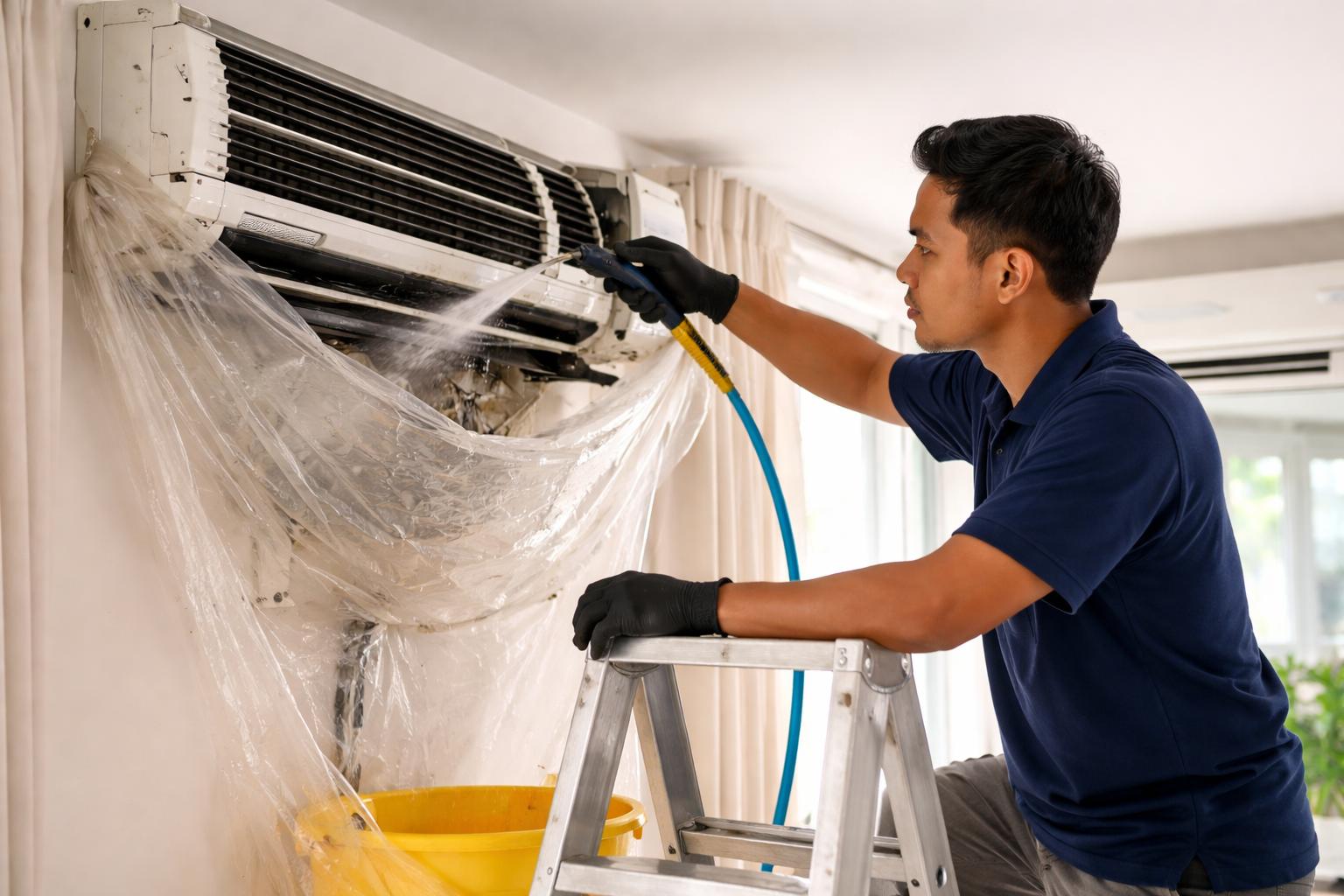

24-Hour Arrival Guarantee
Get Fast Aircond Service, WhatsApp Us And Book In Just 5 Minutes

Professional Service
CIDB Certified Technicians

No Hidden Costs
Clear Transparent Pricing

Cheapest Aircond Service
Insanely Iow Prices For Aircond Installation And Servicing In Malaysia
Guaranteed Arrival Within 24 Hours!
Aircond Leaking Water
Aircond Is Running But Not Cold
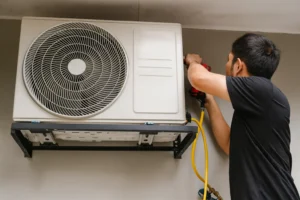
Noisy Compressor, Not Running
Not Cold? Get the Cheapest Aircond Installation & Aircond Service in Malaysia!
The most value-for-money aircond installation and servicing in Malaysia. 4-Hour Express Service.
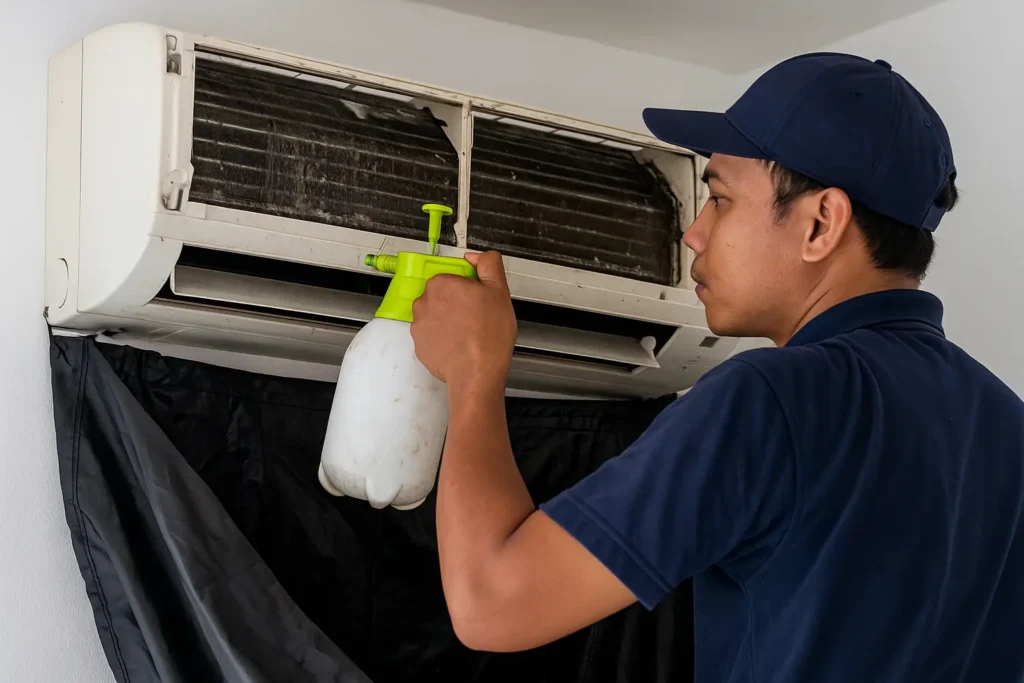
Aircond Service Malaysia
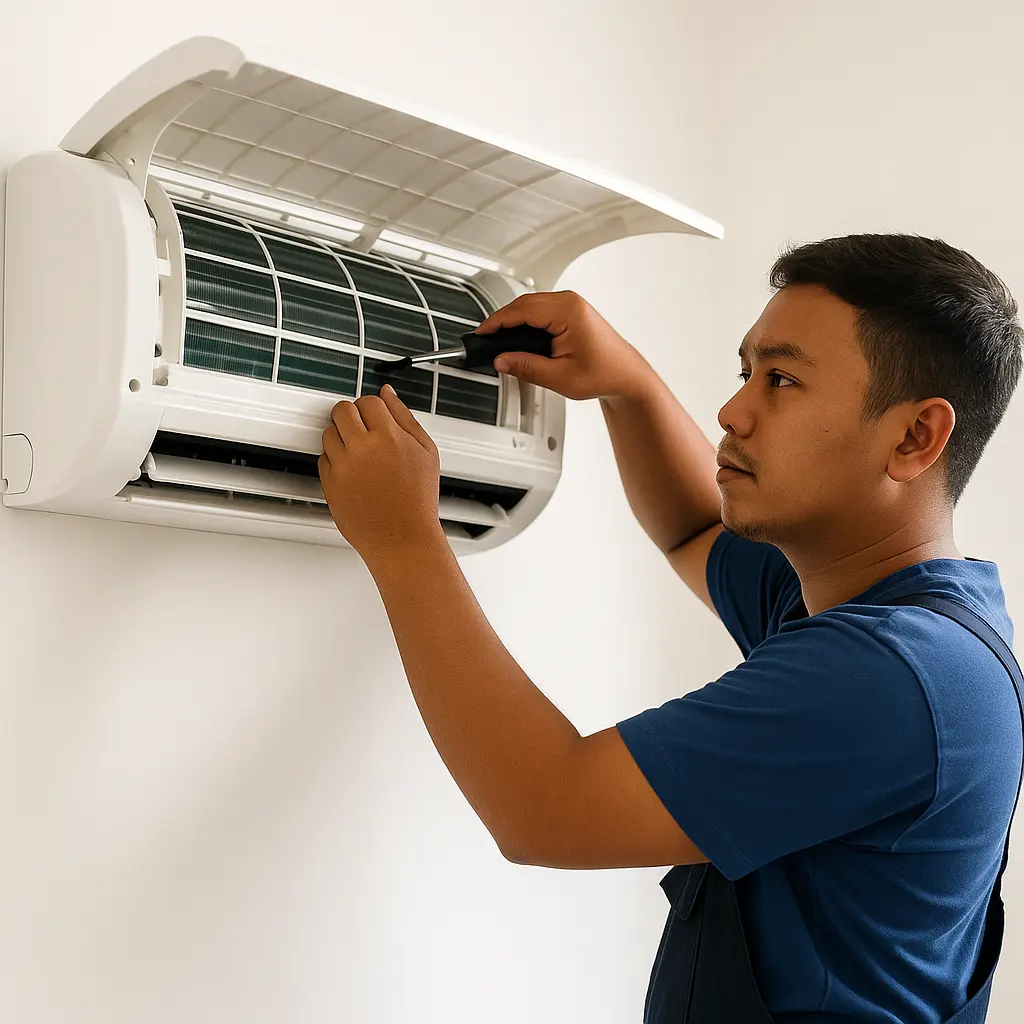
Aircond Installation Malaysia
Free 10 feet of copper pipe
Other Aircond Services Malaysia
4-Hour Express Aircond Installation & Service Malaysia. Same-day service available
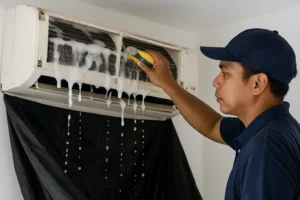

Aircond Service Seremban
Above-the-Fold (Booking-First)
In Seremban, aircond jobs don’t “start” at the unit—they start at the access physics. Basement height limits in some Seremban condo blocks can force street parking and a longer equipment carry, and lift booking limits can delay when tools even reach your floor. Add narrow corridor runs to indoor units in long-layout apartments, and drip control becomes a planning step—not a last-minute towel job. Outdoor unit ledge reach also varies; some balconies have tight clearance and shared rail space, so we confirm safe access before we touch the casing. In older shoplots and landed homes around Rasah and Seremban 2, brittle trunking and rerouted drain routes (from past renovations) can turn a “simple clean” into repeat leakage if the slope and exit path weren’t checked.
Before dispatch, we confirm (1) your access window (guardhouse preregistration, lift slot, parking/loading bay rules) and (2) unit details (type + symptom: not cold, leaking water, noise, odor). We also set mess boundaries early—where water can be drained, where trays can be placed, and which surfaces must be covered.
Tight basement parking + long trolley carry to lift changes how we stage tools and control drips.
We run as an access-problem solver—especially in condo-heavy Seremban setups where guardhouse, lift, parking, and balcony/ledge realities decide the outcome.
WhatsApp/Call for slot fit + pre-check.
Field Triggers That Create “Repeat Problems”
- Leak comes back after a basic clean: drain route slope is still wrong (common in renovated landed homes where piping was rerouted).
- Not cold again within weeks: coil looks cleaner, but airflow is still restricted by clogged blower/filters or a wet coil that never dries properly due to poor drainage.
- Noise keeps returning: outdoor unit fan/vibration wasn’t evaluated against tight balcony clearance or an unstable mounting point.
- Gas top up doesn’t last: the leak point wasn’t isolated first; long piping routes and extra joints in corner units increase leak points if not secured.
- Mold/odor persists: moisture control wasn’t handled—drain condition + coil dryness + drip tray contamination all matter.
Next step: share unit type + symptom + whether it’s condo or landed (access notes help).
Local Notes for Seremban, Negeri Sembilan, Malaysia
Seremban work often gets decided by logistics, not tools. Basement height limits in some condo blocks can push us to street parking, which increases equipment carry distance and changes how we manage water and coverings. Guardhouse preregistration is common in certain condo clusters, and entry can stall if unit number, plate number, and visitor process aren’t ready. Lift booking limits also matter—some buildings restrict service lift slots, so the job start time depends on that window, not just the appointment time.
Older layouts bring different constraints. Walk-up flats and older blocks without lifts raise staircase carry risk for pressure pump, trays, and covers. Long corridor runs to indoor units mean we plan floor protection and drip control from the doorway to the unit—especially when the route passes carpets or tight turns. Balcony/ledge access varies too: some outdoor units sit on narrow ledges with shared rail space, so we confirm reach, stance, and safe tool placement before we open panels.
Renovated landed homes around Senawang, Seremban Jaya, and Mambau can have drain reroutes that look fine on the surface but fail on slope, causing recurring leakage even after cleaning. In older shoplots, brittle trunking can crack during opening/closing if handled roughly, so careful access is part of protecting your walls and wiring routes.
How to avoid delays: prepare guardhouse entry details + lift slot (if required) and keep a clear carry path from parking to your unit.
Micro-scenarios we see locally: Outdoor unit on a narrow ledge + limited balcony clearance means access planning comes first before any servicing. Landed homes with renovated kitchens/yards often have hidden drain reroutes that need tracing when leaks repeat.
We operate as an access-problem solver, built for condo-heavy conditions where parking, guardhouse, lift timing, and balcony/ledge realities decide whether the fix holds.
Next step: send photos of indoor + outdoor unit area and the parking/lift approach notes.
Booking Process (How It Works)
- Share essentials (fast triage): unit type (wall/cassette), number of units, symptom (not cold / leaking water / noise / odor), and whether it’s condo/landed/shoplot.
- Access confirmation: parking/basement limits, guardhouse preregistration, lift booking, balcony/ledge reach notes, and any noise-rule windows.
- Scope call (what we’re likely doing): normal servicing vs chemical wash vs drain remediation vs fault-check (inverter/PCB/compressor indicators).
- On-site workflow: protect area → inspect airflow/coil/drain → service/clean → test run → quick verification checklist.
- Close-out: what changed, what to monitor, and when a follow-up is required (if parts/hidden routing is involved).
WhatsApp/Call once you’ve confirmed access window + symptoms.
If you have photos/videos ready, WhatsApp them for a faster slot fit.
Photo/Video Pre-Check Tip (Send Before Dispatch)
- Take a 10–15s hallway-to-unit walk video (long corridor runs are common; we plan cover-up and drip control).
- Snap the indoor unit front + underside (leak marks, airflow direction, and access to open panels).
- Take a photo of drain exit point (yard/floor trap/pipe end)—Seremban layouts sometimes lack a nearby floor trap.
- Record a 5s outdoor unit video showing ledge/balcony clearance (narrow ledges with shared rail space change access).
- If condo: include parking entry height sign / basement ramp view (height limits can force street staging).
- If condo: show lift lobby + service lift rules/booking note if posted.
- Include your area tag (e.g., Seremban 2, Rasah, Senawang) so routing matches your window.
- Do this: send indoor + outdoor + drain + access path media in one batch / Avoid this: sending only a close-up with no context.
Next step: add unit count + “not cold/leak/noise/odor” label on each photo set (no long explanations needed).
Access & Mess Control Do/Don’t
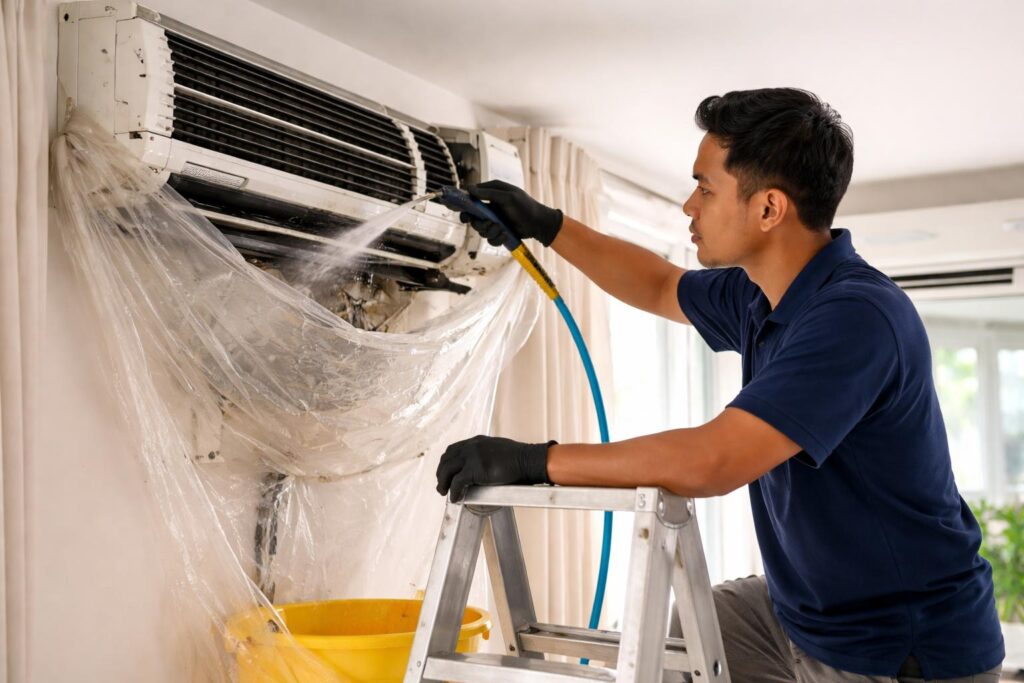
- Protect the carry path first: long corridor runs in some apartments mean floor protection starts outside the unit.
- Keep a clear staging corner: tight service yards in landed homes can limit where trays/pump can sit.
- Plan for basement constraints: if height limits block basement access, street staging and longer carry must be allowed for.
- Respect lift timing: lift booking limits can compress start time—tools must be staged to move fast once lift is available.
- Watch brittle trunking: older shoplots/houses may crack if forced; gentle opening prevents cosmetic damage.
- Manage drain water properly: no nearby floor trap in some layouts means trays and controlled discharge matter.
- Local example: in Seremban Jaya, condo guardhouse entry + lift slot often decide the true start time.
- Do this: clear a 1m working zone under the indoor unit + cover nearby items / Avoid this: leaving loose items directly under the drip line.
Next step: confirm where water can be discharged and whether you have a nearby water point.
What Is Aircond Servicing (And What It Isn’t)?
Aircond servicing is the clean + check workflow that restores airflow, reduces moisture problems, and confirms basic operating behavior (temperature drop, drainage, unusual noise). It typically focuses on filters, blower area condition, evaporator/FCU coil condition (as applicable), drip tray/drain line condition, and the outdoor unit’s general condition (fan operation, obvious blockage).
It isn’t automatically a chemical wash, it doesn’t guarantee cooling if there’s an underlying gas leak or electrical/control issue, and it doesn’t replace the need to diagnose inverter faults, PCB issues, sensor errors, or compressor problems when symptoms point that way.
Next step: tell us if it’s “not cold,” “leaking water,” “smell,” or “noise,” plus inverter/non-inverter if you know.
What’s Included / Not Included
Included (Servicing workflow):
- Site protection planning (especially for long corridor carry + drip control in condo layouts)
- Basic inspection: airflow restriction, coil condition, drip tray/drain behavior, obvious outdoor unit issues
- Standard cleaning of accessible components (filters, basic blower/coil surface cleaning depending on condition)
- Drain line check for clog signs and water flow behavior
- Test run and basic performance verification (temp drop behavior + noise check)
- Findings summary: what likely caused the symptom and what may require a separate repair scope
Not Included (Parts replacement + major rework): - Replacement of PCB, sensors, blower motor, capacitor, compressor, or major electrical components
- Major piping reroute or concealed drain reconstruction (common if renovation reroutes created poor slope)
- Extensive trunking replacement where brittle/aged casing breaks and needs re-run
- Installation works beyond simple repositioning (new lineset routing, major bracket changes, etc.)
Next step: share whether access is condo/basement and whether leakage is “new” or “repeat after cleaning.”
How to Verify the Service Was Done Right (Quick Checklist)
- Airflow feels consistent across fan speeds (not “weak even on high”)
- No immediate dripping during normal run (after stabilization)
- Drain discharge is observable (or verified by controlled pour/test where appropriate)
- No new rattles from casing after reassembly
- Outdoor unit fan runs smoothly without scraping or abnormal vibration
- Unit achieves a stable temperature drop pattern (not exact numbers—behavioral check)
- Work area is restored: covers removed, surfaces wiped, no residual water trails along corridor
Next step: do a 20–30 minute normal run test and note any drip/noise/odor changes.
Typical Timeline & What Affects It
Most Seremban jobs move quickly once access is clear, but the timeline is often shaped by “non-work” constraints: parking, guardhouse entry, lift windows, balcony/ledge approach, and how far tools must be carried.
What commonly extends time:
- Multiple indoor units in long-layout homes (more cover-up + more drip control along corridors)
- Condo access constraints (guardhouse preregistration, lift booking limits, basement height restrictions)
- Repeat leakage requiring drain route tracing (especially in renovated landed homes)
- Noise investigation needing safe outdoor unit access on tight balcony/ledge spaces
Next step: share unit count + building access rules so the visit scope matches the time window.
Cost Drivers (No Exact Prices)
- Service type + condition level: normal servicing vs chemical wash vs drain remediation vs fault-check scope.
- Access physics in condo-heavy Seremban: basement height limits, long carry paths, lift booking limits, and balcony/ledge reach complexity.
- Leak recurrence complexity: drain slope issues from renovation reroutes can require tracing beyond a basic clean.
- Parts uncertainty: inverter/PCB/compressor indicators may shift the job from cleaning to diagnosis + parts planning.
What changes the plan: if the outdoor unit is on a narrow ledge with limited clearance, we may need a different access approach before any servicing begins.
Next step: send photos/videos of outdoor unit placement + your parking/lift rules.
Common Local Scenarios (Condo / Landed / Renovation / Shoplot)
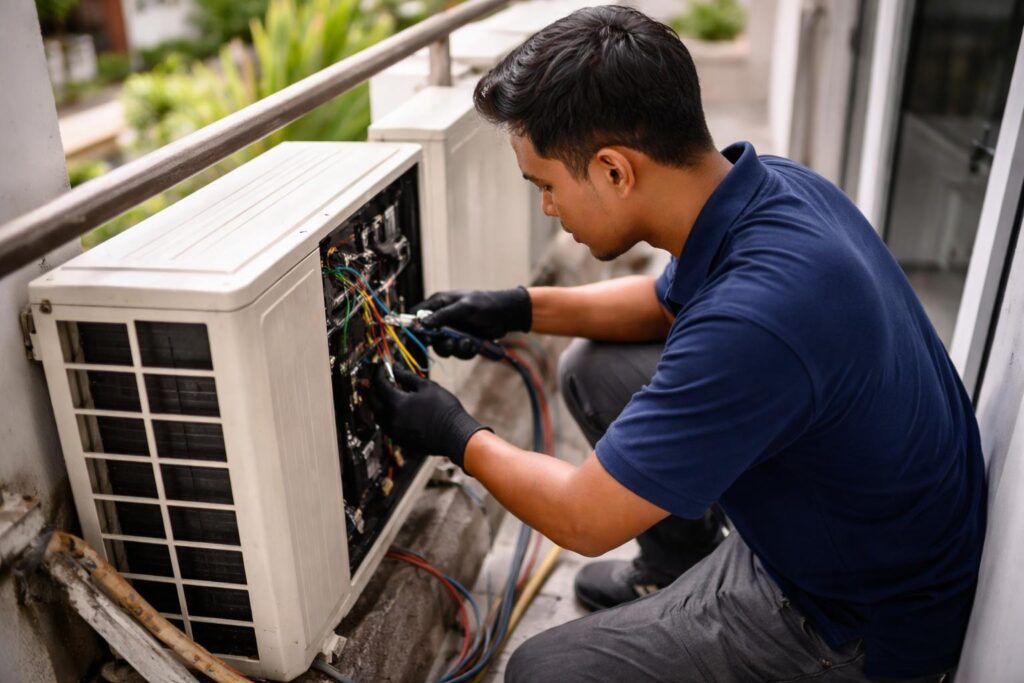
Condo
- Guardhouse preregistration + lift booking limits can compress the workable window; we stage tools to move fast once entry is granted.
- Basement height limits may force street parking and longer trolley carry, which changes drip-control planning in corridors.
- What changes the plan: balcony/ledge clearance is tighter than expected, so outdoor unit access is reassessed before opening panels.
- Risk control: corridor and lift-area protection to prevent water trails and resident complaints.
- Areas we often cover: Seremban 2, Lobak, Bukit Kepayang.
Landed
- Tight service yard space with grills/storage affects where we can stage pump/trays and how we route discharge water.
- Some layouts have limited water points and no nearby floor trap, so mess control and discharge planning matter.
- What changes the plan: drain exit is far and slope is marginal, requiring routing checks rather than only cleaning the indoor unit.
- Risk control: controlled discharge + tray management to avoid staining and slip hazards.
- Areas we often cover: Senawang, Mambau, Ampangan.
Renovation
- Drain route slope issues appear after extensions when piping was rerouted; repeat leakage usually means the exit path is still wrong.
- Older trunking can be brittle; careful opening prevents cracks and cosmetic damage.
- What changes the plan: hidden joints/bends in longer piping routes create new leak points, shifting work toward inspection and stabilization.
- Risk control: contain drips during tracing and protect cabinets/walls near modified routes.
- Areas we often cover: Rasah, Paroi, Seremban Jaya.
Shoplot
- Outdoor units may be positioned with limited service clearance; safe reach and stable stance are verified first.
- Shared utility zones and constrained back areas can limit discharge options during cleaning.
- What changes the plan: power distribution/load constraints require a safer run-test approach before extended troubleshooting.
- Risk control: avoid power trip risk by staging tests and checking for unstable connections (no unsafe DIY steps).
- Areas we often cover: Sikamat, Nilai, Mantin.
- Next step: tell us which scenario fits you (condo/landed/renovation/shoplot) and the main symptom.
FAQs
We switch to street staging and plan the carry path (trolley distance, lift access, and where water discharge is allowed). That affects timing more than the cleaning itself, so we lock parking + lift window first. Share basement clearance info + parking option + lift rules.
Most management wants unit number, visitor name, vehicle plate, and a defined entry window; missing one item can stall access. Once prereg is done, the job start becomes predictable. WhatsApp/Call and send the prereg requirement screenshot.
We pre-stage workflow: confirm unit count, decide which unit first, and set the mess-control boundary so we don’t waste lift time hunting for water points. A tight lift slot works if prep is done before tools move up. Share your lift slot duration + unit count + floor level.
We treat the corridor as part of the work zone: cover the carry path, use trays at the unit, and keep discharge controlled (especially when there’s no nearby floor trap). This avoids water trails and resident complaints. Share a quick hallway-to-unit video + the nearest water/discharge point.
Usually yes, but we assess clearance and stance first because tight rail space changes how panels open and where tools can sit. If access is unsafe, we adjust scope rather than force it. WhatsApp/Call with a clear balcony/ledge photo.
Renovations often reroute drains with poor slope or hidden bends, so water backs up even after a normal clean. Fixing “the path” matters more than cleaning again. Share where the drain exits + whether the pipe was moved during renovation.
Clear a workable staging corner for trays/pump and give access to the indoor unit underside. When space is tight, staging decides whether we can work cleanly and fast. Share a photo of the service yard + the indoor unit location.
We open gently and avoid aggressive prying, but brittle trunking can fail if it’s already aged. If it breaks, we’ll flag it as a separate cosmetic/routing scope rather than improvising a messy patch. Share close-ups of the trunking condition and the trunking route turns.
Yes—if we plan around the least congested window so carry path and entry aren’t blocked. Timing windows matter more in internal roads with narrow choke points. Share your preferred two windows (best + backup) and building entry rules.
We verify airflow restriction and coil condition first because a dirty/blocked system can feel like low gas. If symptoms suggest a leak, we avoid “top up then hope” and move to proper checks. WhatsApp/Call with your unit model + “not cold” history.
Not always—tight balcony clearance, mounting vibration, or debris contact can create noise that sounds like a motor issue. We confirm the source before recommending parts. Share a 5–10s video of the noise + outdoor unit mounting photo.
Standard servicing and checks usually fit; deeper troubleshooting or multi-unit chemical wash may not. We scope to your allowed hours so the job finishes cleanly within the rule window. Share your building’s allowed hours + unit count + symptom list.
When there’s heavy buildup, stubborn odor, or repeated drainage/mold issues that basic cleaning won’t resolve. If leakage is repeat, we also check drain slope/routing so you don’t pay for the wrong “fix.” Share photos of the unit condition + symptom timeline.
Confirm where we can park/stage, ensure lift access is ready, and clear the corridor path to the unit so we don’t stop mid-carry. This keeps drips controlled and prevents lost time. WhatsApp/Call and send parking + lift notes.
More joints and bends can increase leak points if fittings aren’t secured or insulation is poor, especially on long routes in corner units. We inspect visible joints and advise if the route needs attention beyond servicing. Share indoor-to-outdoor route notes + any past leak history.