
24-Hour Arrival Guarantee
Get Fast Aircond Service, WhatsApp Us And Book In Just 5 Minutes

Professional Service
CIDB Certified Technicians

No Hidden Costs
Clear Transparent Pricing

Cheapest Aircond Service
Insanely Iow Prices For Aircond Installation And Servicing In Malaysia
Guaranteed Arrival Within 24 Hours!
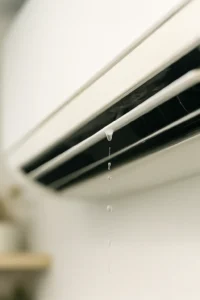
Aircond Leaking Water
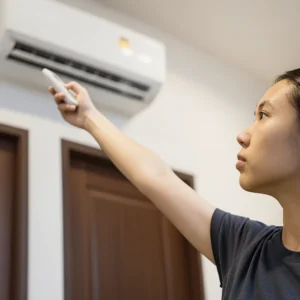
Aircond Is Running But Not Cold
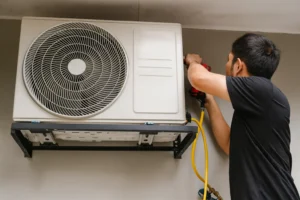
Noisy Compressor, Not Running
Not Cold? Get the Cheapest Aircond Installation & Aircond Service in Malaysia!
The most value-for-money aircond installation and servicing in Malaysia. 4-Hour Express Service.
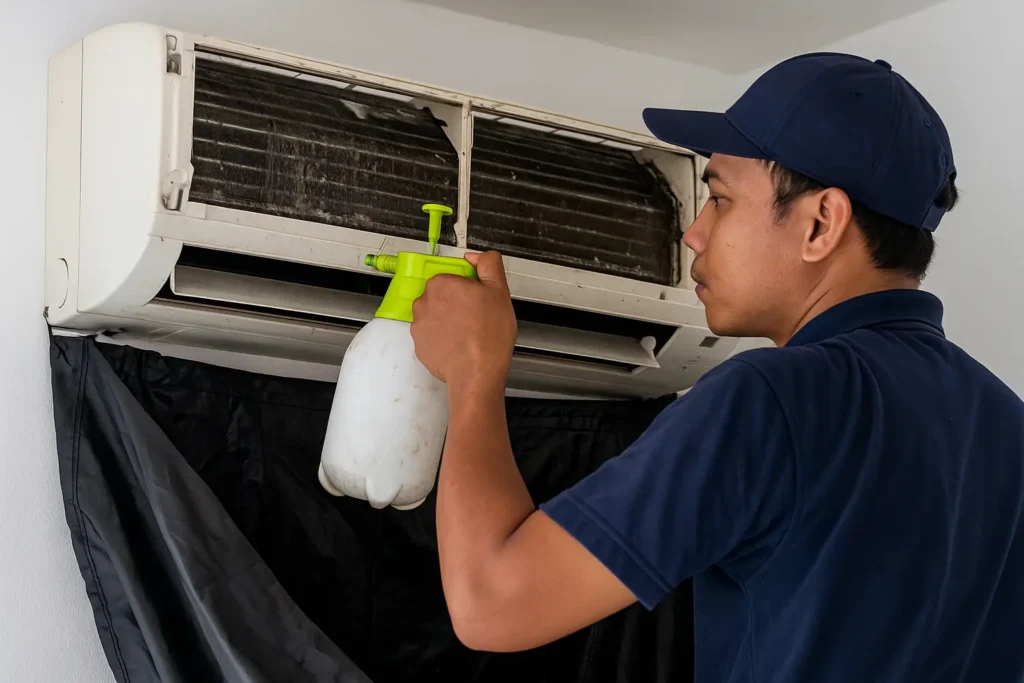
Aircond Service Malaysia
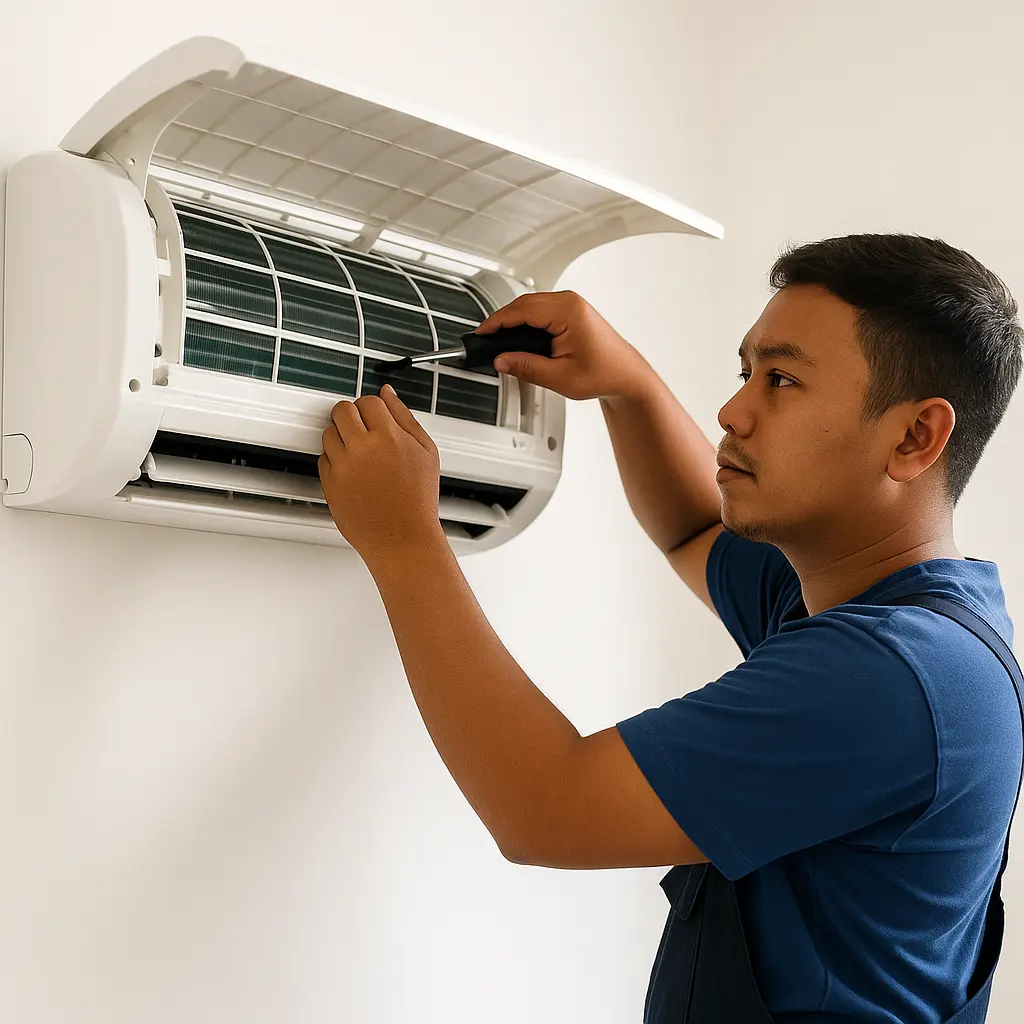
Aircond Installation Malaysia
Free 10 feet of copper pipe
Other Aircond Services Malaysia
4-Hour Express Aircond Installation & Service Malaysia. Same-day service available
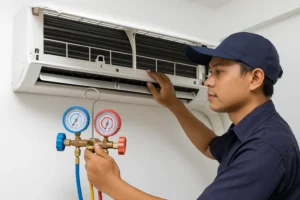
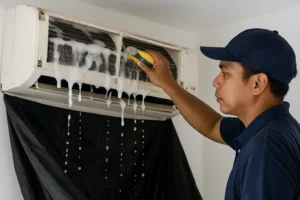

Aircond Service Melaka (Servicing, Repair, Chemical Wash, Gas Top Up)
Fast, clean, access-aware aircond work across Melaka—share your unit type + symptom + access notes for a quick check (WhatsApp/Call).
Melaka Access Reality: Why Jobs Fail (Or Repeat) When Access Isn’t Solved First
Melaka isn’t “one standard visit.” Tourist-peak traffic, old-town shoplot geometry, condo rules, basement limits, and balcony/ledge placement can turn a normal servicing into delays, mess risk, or incomplete cleaning. Our workflow starts with ACCESS PHYSICS FIRST so the tech arrives prepared—right tools, right carry plan, right water/mess control.
Next step: Confirm your building type (landed/condo/shoplot) + where the indoor/outdoor units are located.
What We Handle in Melaka
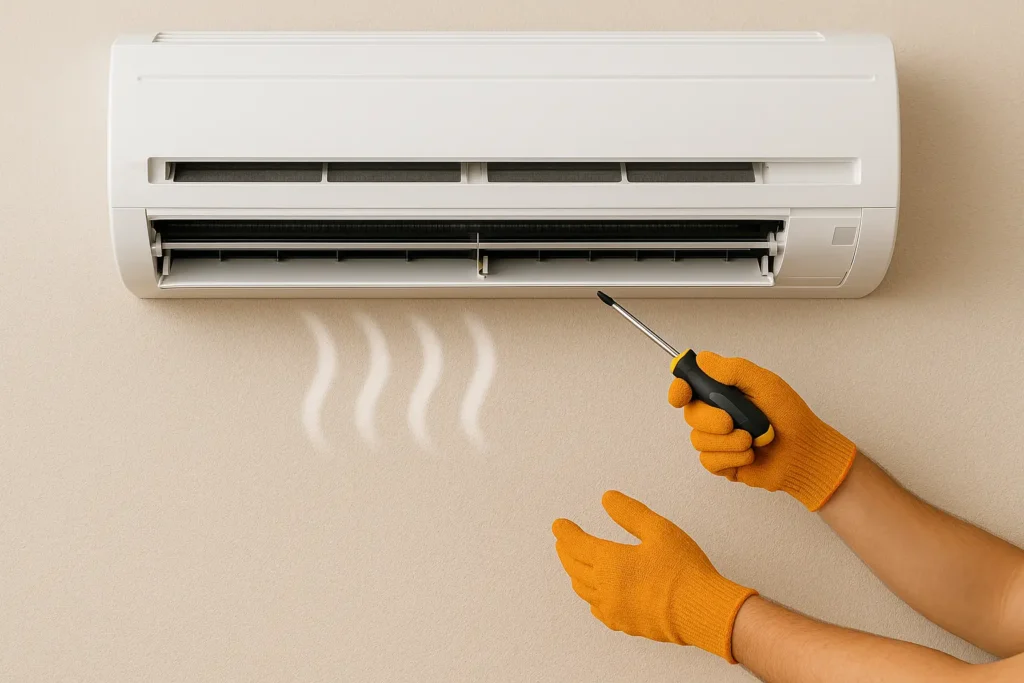
- Routine aircond servicing (coil surface clean, filter wash, airflow check)
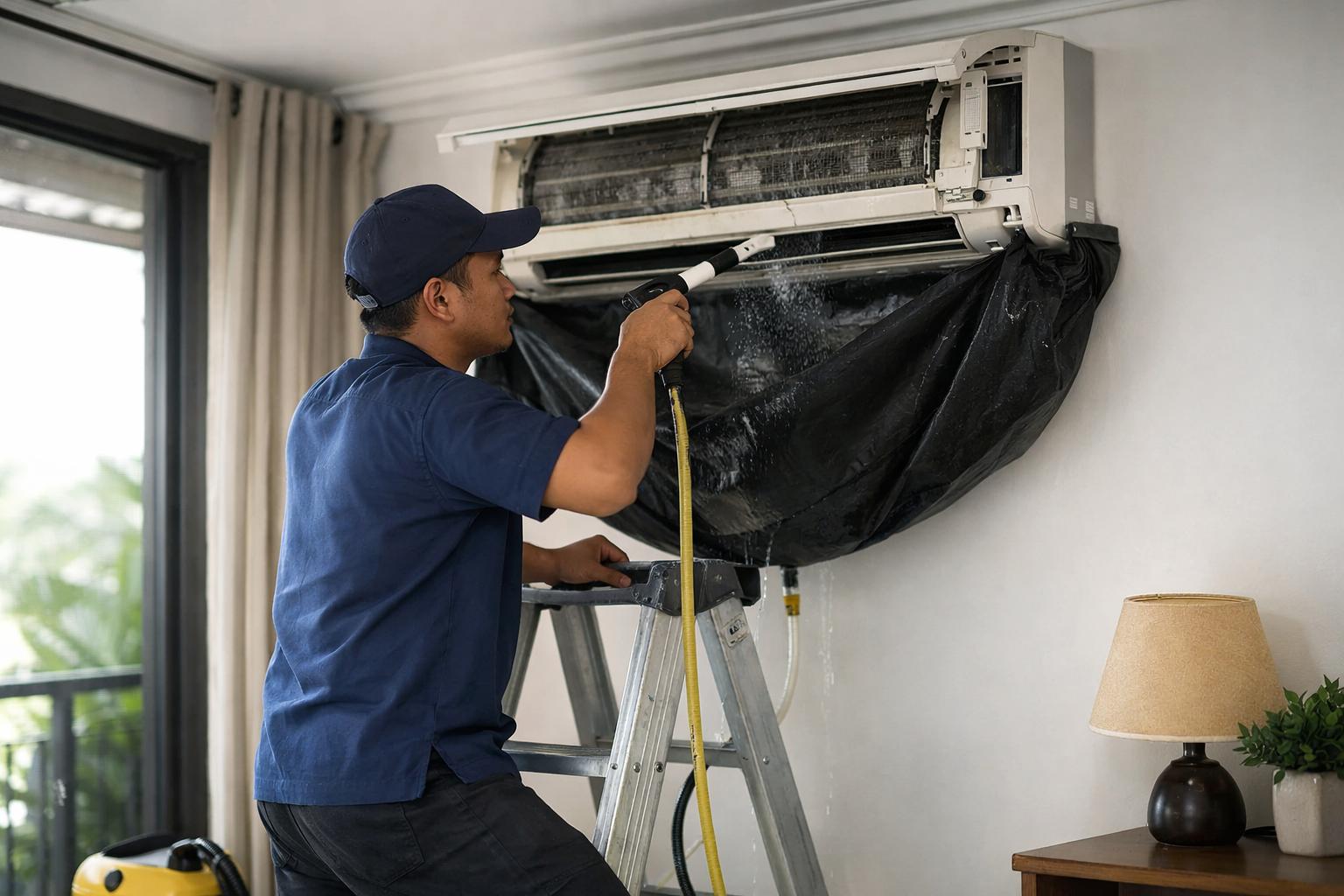
- Troubleshooting + repair for “tak sejuk”, leaking, noisy operation
- Chemical wash (when buildup/odor/drain sludge requires deeper cleaning)
- Gas top up (only after leak-risk checks; not a “blind refill”)
- Inverter aircond problem checks (sensor/board behavior symptoms, protection trips)
- Compressor/ODU issues (fan weak, abnormal noise, thermal cut patterns)
- Aircond installation Melaka (subject to site constraints + piping route feasibility)
Next step: Share the number of units + brand + whether it’s inverter/non-inverter.
Why “Access-Problem Solver” Matters in Melaka
Most repeat complaints come from access constraints that block proper wash, proper drain testing, or proper ODU checks.
We plan around:
- Basement carry distance and lift booking windows
- Condo loading bay time-boxes and tool staging
- Narrow corridors that limit FCU panel opening
- Outdoor unit on narrow ledge/balcony with limited clearance
- Shoplot ceilings + ladder space + after-hours access
Next step: Send a quick note on parking (basement/open), lift rules, and any tight corridor/ledge constraints.
Local Reality Cues (Melaka-Specific)
- Tourist-peak congestion near Bandar Hilir can wipe out parking windows and delay van approach
- Narrow shoplot lanes in old-town pockets reduce turning radius for the service van (ACCESS)
- Upper-floor shoplots with tight staircase landings increase carry risk and slow setup (ACCESS)
- Mixed-use blocks choke at meal times; parking gets “locked in” and retrieval becomes hard (ACCESS)
- Some condos require lift booking and have lift-size limits for tool carry + drip trays (ACCESS)
- Basement height limits at certain carparks restrict van entry; longer trolley carry becomes necessary (ACCESS)
- Older layouts sometimes have narrow corridors; FCU panel opening angle gets limited (ACCESS)
- Outdoor unit on a narrow ledge with tight balcony clearance affects safe reach and rinse direction (ACCESS)
- Older buildings with brittle trunking can crack when opened/reseated (uncommon)
- Restricted work hours/noise rules at some condos force tighter scheduling (uncommon)
- Limited water points or awkward wet-area access affects rinse + cleanup planning (uncommon)
- No floor trap near the unit changes how wash water is contained and cleared (uncommon)
- High humidity + odor complaints after rainy periods increase coil/mold attention
- Drain route slope issues show up more when piping runs are long or patched over time
Next step: Share a photo of the indoor unit position + a photo of the outdoor unit location (balcony/ledge/back-lane).
Micro-Scenarios We See Around Melaka
- Tight basement parking + long trolley carry to the lift slows setup and increases spill-risk if not planned. (ACCESS)
- Outdoor unit on a narrow ledge with limited balcony clearance needs safe positioning before any chemical wash. (ACCESS)
- Drain slope misalignment causes “bocor berulang” even after a basic servicing visit.
- Old condo trunking route forces a longer piping path; cooling drops if the run isn’t checked properly.
- Shoplot upper floor with narrow stairs means we minimize bulky tools and plan carry order.
Next step: Tell us if your issue is “bocor air” vs “tak sejuk” vs “bunyi bising” (main symptom first).
Service Coverage Pockets (No Street Addresses)
Bandar Hilir, Klebang, Ayer Keroh, Batu Berendam, Cheng, Bukit Katil, Ujong Pasir, Duyong, Kota Laksamana, Taman Kota Laksamana, Taman Merdeka, Taman Malim Jaya, Taman Tasik Utama, Semabok, Alor Gajah, Jasin.
Next step: Share your area name + building type so we can route the right slot.
What’s Included (Typical Visit Scope)
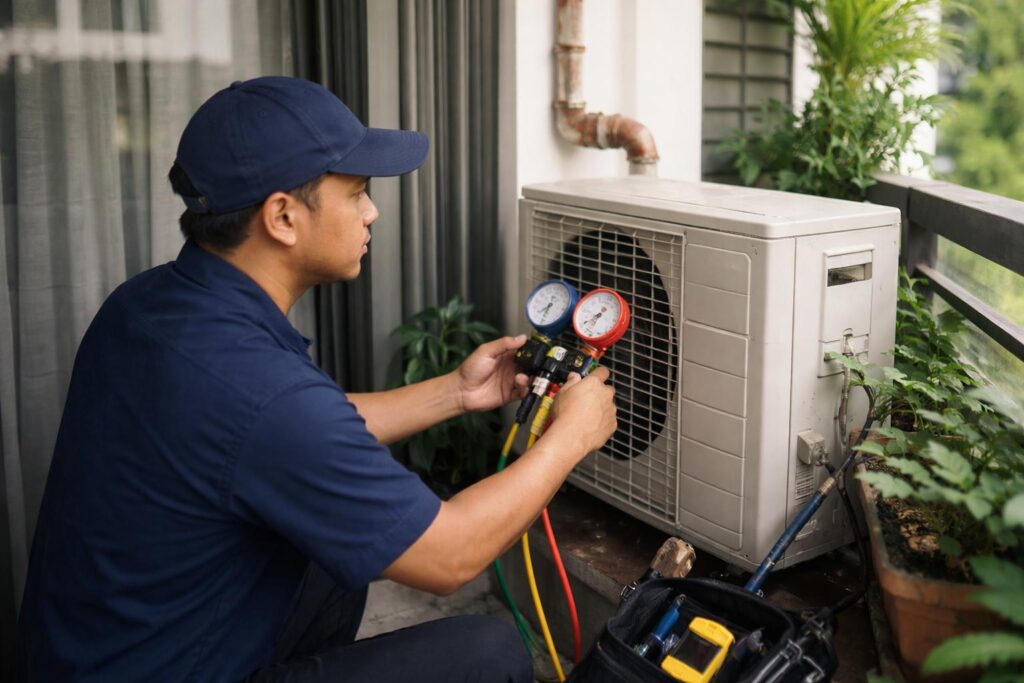
- Visual checks: FCU condition, drain route, trunking/piping condition where accessible
- Basic cleaning: filter + cover clean, coil surface clean (non-invasive)
- Drain assessment: flow test indications, clog risk signs, leak pattern notes
- Airflow + cooling symptom checks: weak airflow vs low cooling vs short cycling
- ODU quick checks: fan behavior, vibration/noise pattern, obvious airflow obstructions
- Mess control: tray/covering planning aligned to access constraints
Next step: Confirm how many FCUs you want serviced and whether any unit is high-mounted or boxed-in.
What’s Not Included (So There’s No Surprise)
- “Blind gas top up” without addressing leak-risk indicators
- Full chemical wash when access/mess containment cannot be managed safely
- Replacement parts without diagnosis and scope confirmation
- Unsafe work that violates building rules or creates fall/mess risk
- Major pipe reroutes without a proper route check (trunking, slope, clearance)
Next step: If your place has strict rules, share the management requirements (work hours, lift booking, loading bay).
“ACCESS PHYSICS FIRST” On-Site Workflow (Blueprint 3)
1) Arrival Setup Based on Access Constraints
- Confirm parking approach, carry path, lift booking window, and tool staging point
- Identify wet-area access or alternative containment plan if no floor trap exists
Next step: Confirm your preferred access window and whether visitor registration is required.
2) Unit-by-Unit Diagnosis Before Any Heavy Cleaning
- Separate “cooling problem” from “airflow problem” from “drain problem”
- Check for signs that a basic servicing won’t solve (sludge, odor, recurring leak)
Next step: List which unit is worst and when the symptom happens (day/night/rainy days).
3) Execute the Right Level of Work
- Servicing when buildup is moderate and drain risk is low
- Chemical wash when coil/blower buildup or odor/sludge patterns require it
- Repair path when electrical/board/sensor behavior suggests protection trips
Next step: Confirm if your unit is inverter and whether it trips or shows error indicators.
4) Clean Finish + Practical Prevention Notes
- Prevent immediate re-soil: filter habits + airflow obstruction checks
- Drain management guidance based on your piping slope and route length
Next step: Share if your leak happens only after long runtime or only during heavy rain.
Booking Process (Melaka)
- Share essentials: unit count + type (inverter/non-inverter) + main symptom + location type (condo/landed/shoplot).
- Provide access notes: basement/guardhouse/lift booking/loading bay + ODU placement (balcony/ledge/back-lane).
- We match scope to slot (subject to schedule) and arrive with the right containment/tools.
WhatsApp/Call to send photos + access notes first.
WhatsApp/Call to confirm the best slot fit (subject to schedule).
Unique Module 1: Common Mistakes That Cause Repeat Issues
- Gas top up without leak thinking: cooling improves briefly, then drops again because the root cause stays.
- Servicing when a chemical wash is needed: coil/blower sludge remains; odor/leak symptoms return.
- Ignoring drain slope/route length: water finds the lowest point—leak repeats after a “clean.”
- Skipping ODU airflow reality: blocked discharge zones or weak fan behavior keeps pressures high.
- Forcing brittle trunking open/close: cracks lead to poor sealing, condensation drips, or messy patchwork.
Next step: Tell us if the issue repeats after 1–3 weeks or after rain/humidity spikes.
Unique Module 2: Access & Mess Control Do/Don’t
Do
- Do clear a small staging zone near the FCU (floor space matters more than you think)
- Do confirm lift booking + protective mat rules before the visit
- Do identify a usable water point and a path for controlled rinse/wet handling
- Do share ODU access photos if it’s on a ledge/balcony
Next step: Send one photo per unit (FCU + ODU) so we plan containment properly.
Don’t
- Don’t assume a narrow corridor allows full panel opening and proper tray seating
- Don’t book a short loading-bay window if setup requires long trolley carry
- Don’t push chemical wash in a ledge-tight setup without safe reach planning
- Don’t expect leak resolution if drain slope and route aren’t checked
Next step: Share your corridor width constraints and whether the FCU is close to curtains/wardrobes.
Checklist Before the Tech Arrives (Melaka-Friendly)
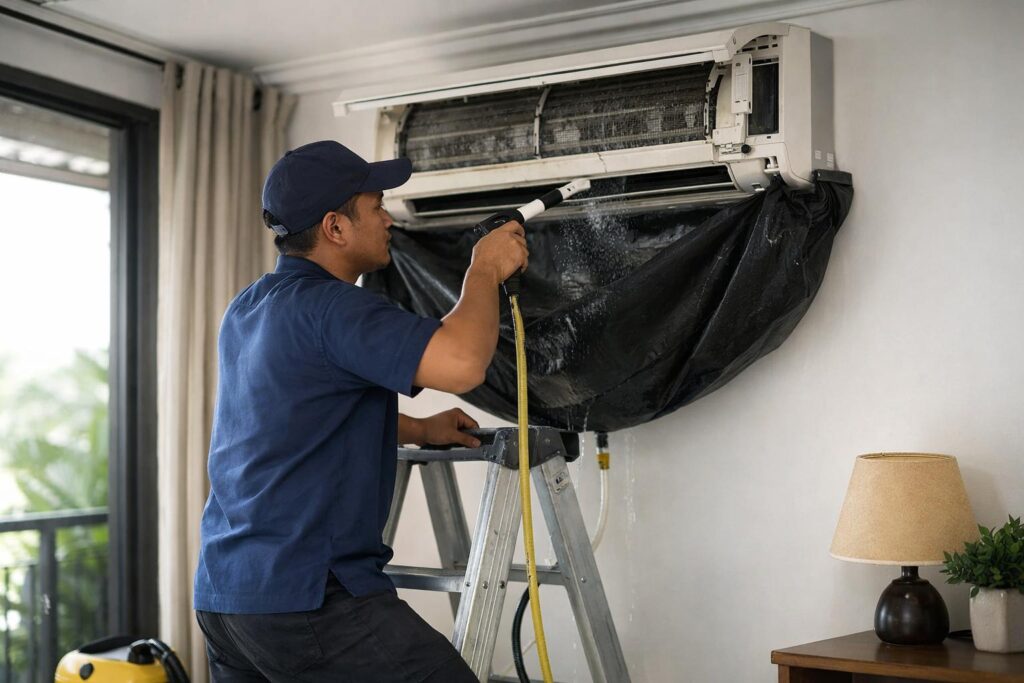
- Unit count + brand + inverter/non-inverter
- Main symptom per unit: tak sejuk / bocor air / bunyi bising / trips
- Condo/shoplot access: lift booking, loading bay time, guardhouse entry steps
- Parking reality: basement height limits, long carry distance, trolley route
- ODU location: balcony/ledge/back-lane and clearance around it
- Any noise/time restrictions for your building
Next step: Prepare photos + your preferred access window (2 options helps).
Timeline Expectations (Subject to Schedule)
- Small servicing scope: faster when parking + access are straightforward
- Chemical wash: longer when containment + wet handling must be carefully controlled
- Repair/diagnosis: time varies based on symptom behavior and access to inspect safely
Next step: Flag if you have a hard building window (work hours/lift booking slot).
Cost Drivers (No Fixed Prices)
- Work type: basic servicing vs chemical wash vs repair path
- Unit accessibility: high-mounted FCU, tight corridor, boxed-in install
- ODU reach + clearance: balcony/ledge/back-lane constraints
- Drain route complexity: long runs, patched slopes, trunking condition
- Condo logistics: lift booking, loading bay limits, basement carry distance
Next step: Share your install type (concealed trunking vs exposed) and whether leaks repeat.
Shoplot-Heavy Considerations (Decision Lever)
Melaka shoplots often mean ceiling height, back-lane congestion, narrow stairs, and after-hours planning. For upper floors, ladder space and carry order matter—especially when you need mess control for a chemical wash or when ODU access is tight behind signage/ducting zones.
Next step: Confirm floor level + stair width + whether after-hours access is required.
FAQs
It can, especially during tourist-peak windows when parking turns into short “open/closed” cycles. Next step: Share your area + preferred 2 time windows (one main, one backup).
Yes, but we plan turning radius + unload point first so tools don’t get carried too far or staged in unsafe spots. Next step: Share your shoplot floor level + staircase width + nearest legal unload spot. WhatsApp/Call.
Carry order matters: we minimize bulky items and set up containment before opening the FCU to reduce spill/mess risk. Next step: Confirm if there’s a tight landing or low ceiling near the FCU.
Yes. If lift booking or loading bay windows are tight, we align setup time so the unit isn’t opened before containment is ready. Next step: Share lift booking rules + loading bay duration + where the FCU sits (living room/bedroom).
Possible, but longer trolley carry increases setup time and raises containment importance for wet work. Next step: Share basement height limit + lift distance + whether there’s a usable water point nearby.
It depends on clearance and safe reach; we won’t force wet work if positioning is risky. Next step: Share a clear ODU photo showing railing/ledge depth + working clearance. WhatsApp/Call.
Often drain slope/route issues (long runs, patched sections) or tray seating limits from tight FCU access. Next step: Tell us when it leaks (startup vs 20–40 minutes runtime vs rainy days).
High humidity can worsen coil moisture retention; dirty coils amplify odor and reduce airflow, making cooling feel “soft.” Next step: Share whether odor starts immediately or only after 10–20 minutes running.
We avoid forcing brittle trunking; we plan minimal-open checks and only open where needed to prevent damage. Next step: Share a photo of the trunking corners/joints near the FCU.
Not as a first move. Weak cooling can be airflow restriction, coil buildup, ODU fan weakness, or leak-risk behavior. Next step: Share symptom pattern (gradual drop vs sudden) + whether the ODU fan sounds weak. WhatsApp/Call.
Back-lane congestion can delay ODU checks and tool staging, so timing matters more than distance. Next step: Share the most open window (early/late) and whether deliveries usually block the lane.
Noise type + when it happens matters: vibration at startup vs constant hum vs rhythmic rattles point to different checks. Next step: Share a short noise clip + tell us if it happens only at night or all day.
Usually yes with planning, but chemical wash needs enough time for containment + rinse + cleanup without rushing. Next step: Share your allowed work hours + whether weekend work is restricted. WhatsApp/Call.
Route length, trunking path constraints, balcony clearance for ODU placement, and access window rules are the common blockers. Next step: Share intended FCU location + where the ODU can be placed with proper clearance.
We triage by symptom severity (leak risk/mold/weak airflow) and access sequence so setup isn’t repeated. Next step: List unit-by-unit symptoms and which room is most urgent. WhatsApp/Call.