
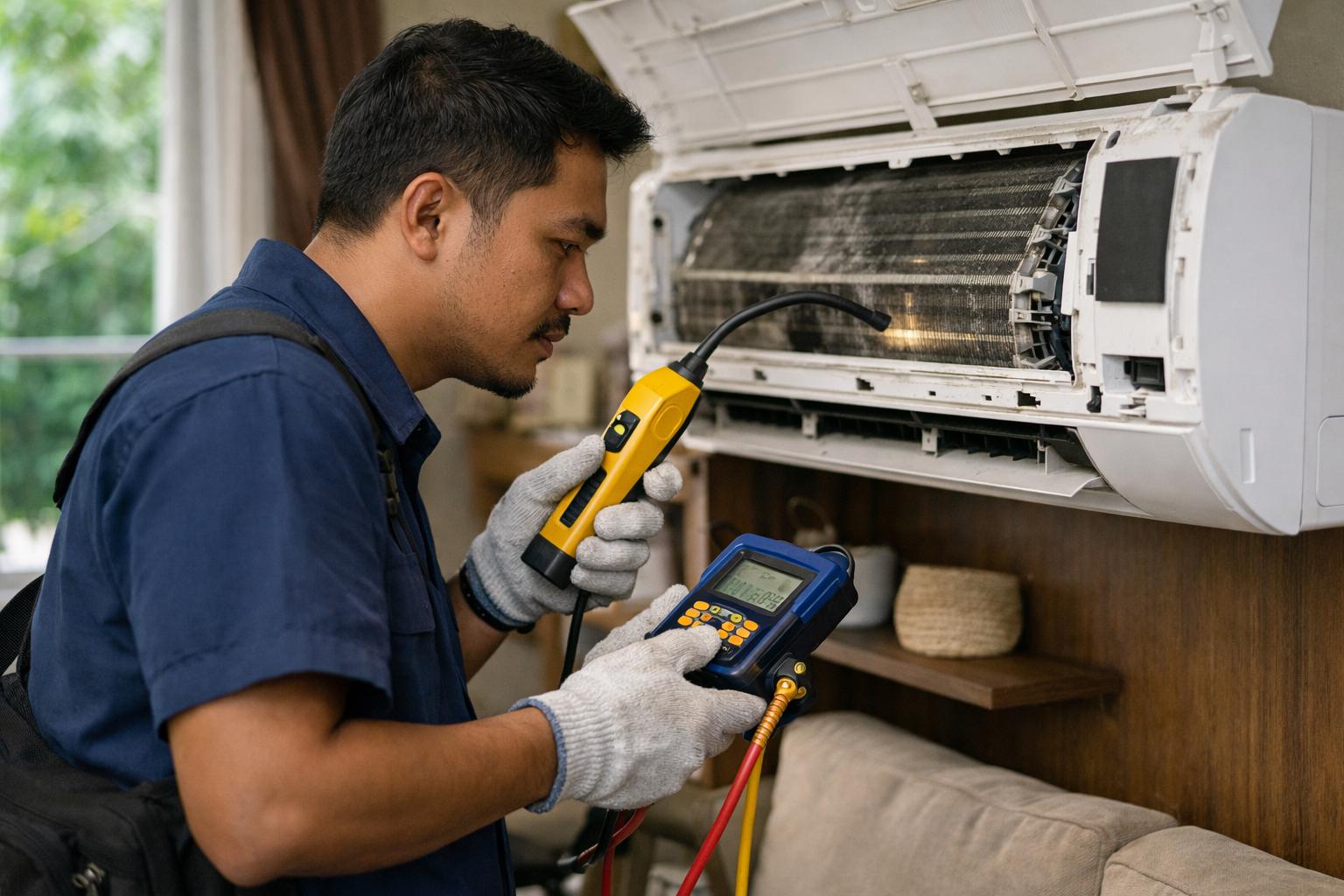
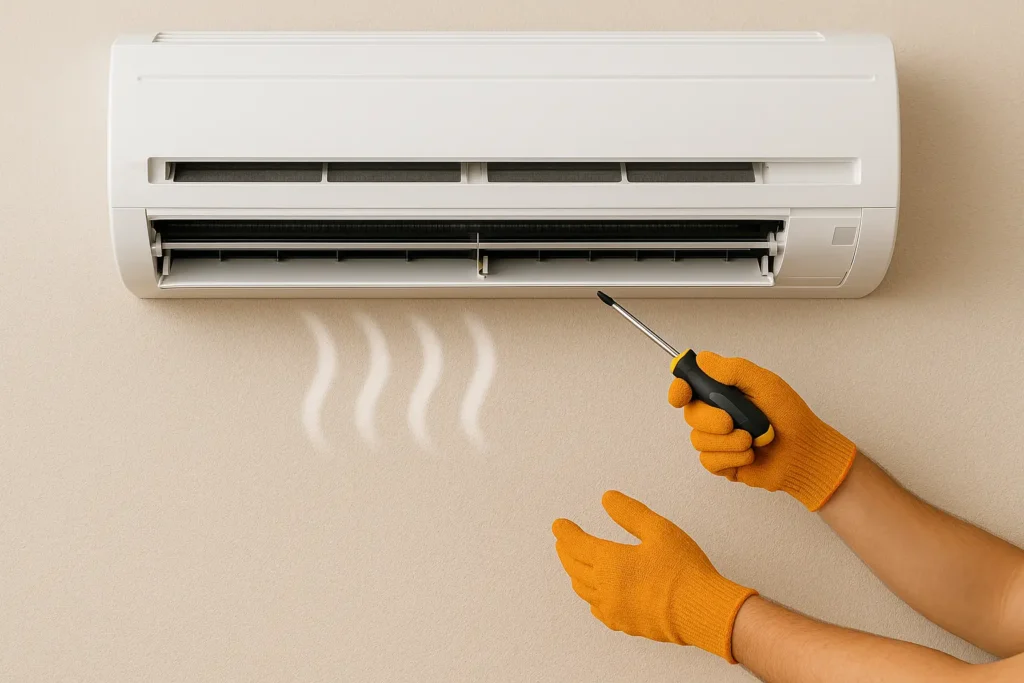

24-Hour Arrival Guarantee
Get Fast Aircond Service, WhatsApp Us And Book In Just 5 Minutes

Professional Service
CIDB Certified Technicians

No Hidden Costs
Clear Transparent Pricing

Cheapest Aircond Service
Insanely Iow Prices For Aircond Installation And Servicing In Malaysia
Guaranteed Arrival Within 24 Hours!
Aircond Leaking Water
Aircond Is Running But Not Cold
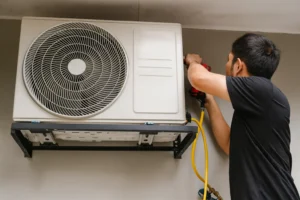
Noisy Compressor, Not Running
Not Cold? Get the Cheapest Aircond Installation & Aircond Service in Malaysia!
The most value-for-money aircond installation and servicing in Malaysia. 4-Hour Express Service.
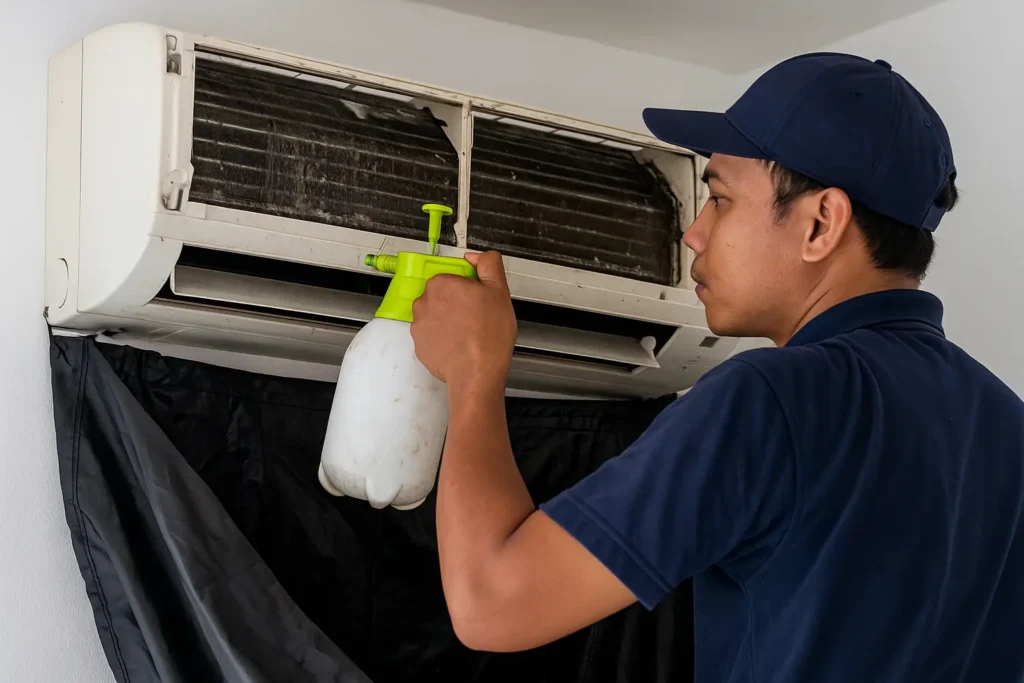
Aircond Service Malaysia
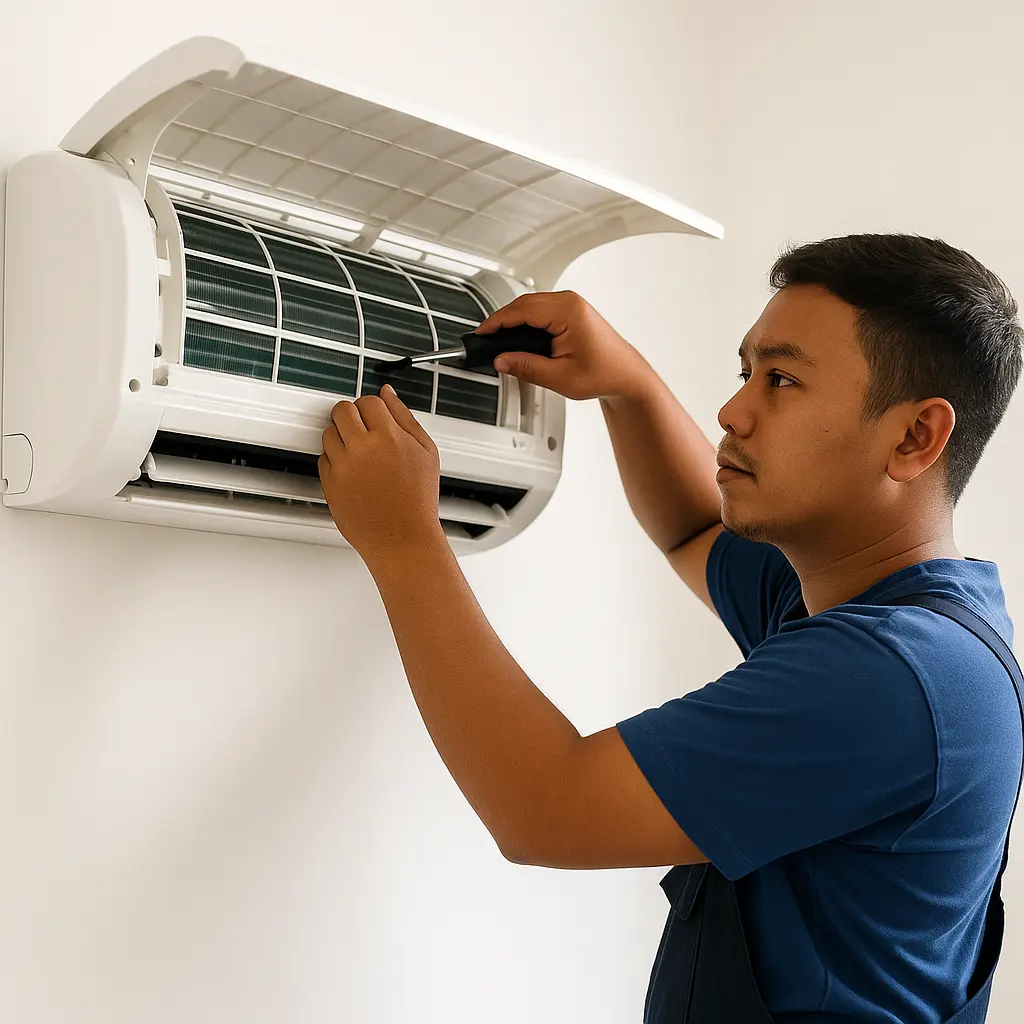
Aircond Installation Malaysia
Free 10 feet of copper pipe
Other Aircond Services Malaysia
4-Hour Express Aircond Installation & Service Malaysia. Same-day service available
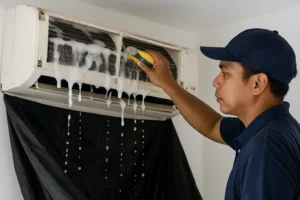

Most Common Aircond Repair Issues in Malaysia
Direct answer
The most common aircond repair issues in Malaysia usually show up as aircond not cold, aircond leaking water, aircond noisy, aircond smells bad, aircond freezing up, or aircond trips breaker. In our heat and humidity, small problems like a blocked drain, weak capacitor, dirty coil, or a gas leak can escalate fast. The right next step depends on the symptom pattern.
Quick answer
Two Malaysia scenarios we see all the time: condo units where the aircond starts leaking at night after weeks of heavy use, and landed homes after haze or renovation dust where airflow drops and the coil starts freezing up.
Most “simple” symptoms can come from different causes. The fastest approach is to match what you see, what you hear, and when it happens (first 10 minutes vs after 1–2 hours, only rainy days, only afternoon, etc.).
If you want, share your symptom, unit type (inverter or non-inverter), and how long it takes before the problem appears. We’ll point you toward the most likely checks before you spend on the wrong fix.
Soft CTA near top
Message us on WhatsApp with your symptom + timing, for example: “not cold after 20 minutes” or “leaking at night”, plus whether it’s inverter or non-inverter. We’ll guide the next step, starting with simple checks first, then inspection if needed. If you want us to check it on-site, book a diagnosis-first visit.
Why local expertise matters in Malaysia
Malaysia aircond problems aren’t only about unit age. They’re often accelerated by humidity, long runtime in high heat, and dust exposure. Condo constraints also matter because access rules, service windows, and outdoor unit reach can change what’s practical on-site. Haze weeks and renovation dust can quickly reduce airflow and trigger freezing or “not cold” complaints. Power fluctuations can also affect electronics, especially on inverter units. Local diagnosis is about patterns—what fails here, how it presents, and what’s worth checking first.
Service overview
This support page is for homeowners, tenants, and office admins who want to understand the most common aircond repair issues in Malaysia and decide what to do next. It covers quick DIY-safe checks, safety red flags, and what a proper inspection should include so you can avoid random part swapping.
Types of services
- Troubleshooting and diagnosis based on symptoms and verification
- Minor repairs such as drain clearing, sensor-related fixes, and capacitor replacement where applicable
- Electrical checks for breaker trips and basic safety concerns
- Performance checks for airflow, temperature behavior, and abnormal icing patterns
Step-by-step process
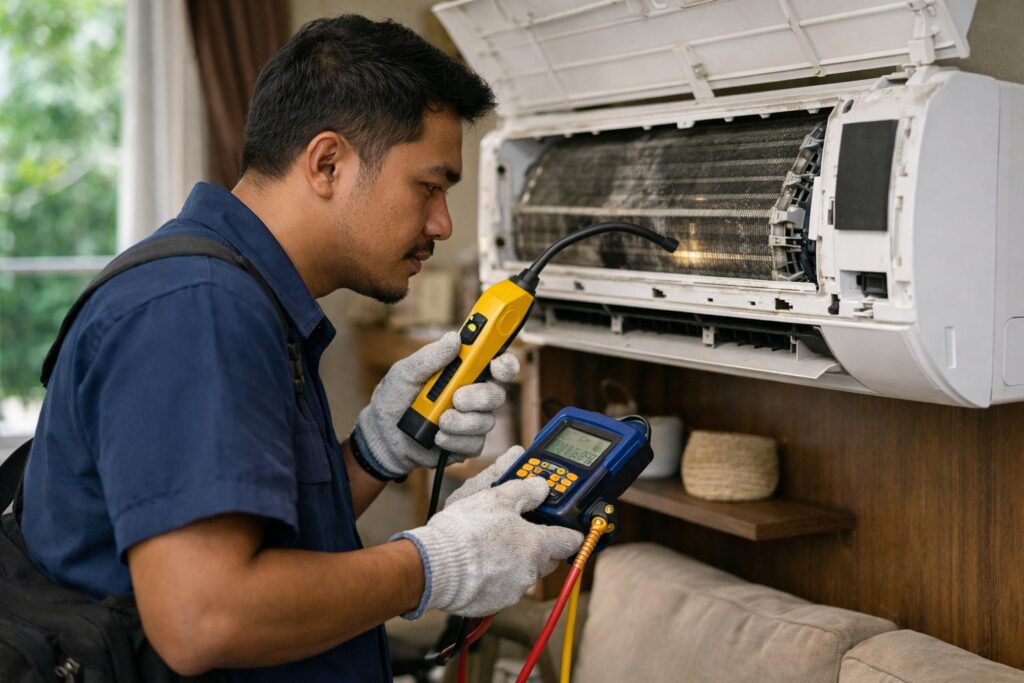
- Symptom mapping: what happens, when it happens, and under what conditions
- Basic performance checks: airflow, cooling behavior, icing signs, drainage flow
- Electrical sanity checks: breaker behavior, capacitor signs for non-inverter units, connection checks
- Leak suspicion checks: signs consistent with a gas leak and points that need testing
- Component confirmation: fan motor problem patterns, thermostat sensor issue patterns, PCB board fault patterns
- Fix plan: repair vs cleaning vs parts replacement based on verified findings
- Post-fix verification: stable cooling, normal operation, no recurring leaks
What’s included
- On-site diagnosis and fault isolation
- Basic checks on indoor and outdoor unit behavior
- Recommendations with prioritized repair options
- Quote for repair work if needed
What’s not included
- Major component replacement without confirmation
- Work requiring special access arrangements or restricted areas
- Non-aircond electrical issues in the home or building supply
Frequency and best practice guidance by scenario
- Daily use / WFH: watch for slow decline—less cold over weeks, louder fan, more water at the drain point
- Condo units: repeated leaking needs early attention to prevent water damage
- After renovation or haze: check filters early; “not cold” right after dust exposure is often airflow-related first
- Breaker trips even once: treat it as a safety signal—don’t keep resetting and retrying
Cost factors and what a fair quote includes
Repair cost varies by unit type (inverter aircond repair often involves more electronics/diagnostics), access difficulty (especially condos), and the confirmed root cause (cleaning-related, electrical, refrigerant-related like gas leak, or component failure). Part availability and whether parts are original-spec or compatible alternatives can also change the total.
What a fair quote includes checklist
- Clear problem statement showing the confirmed cause, not just the symptom
- What will be tested after repair (cooling stability, drainage, abnormal noise)
- What parts are being replaced and why (not “just try first”)
- Any access constraints and what’s needed (including condo rules)
- Warranty terms for parts/labour if offered, explained clearly
- A next-step plan if the symptom returns or if deeper faults appear during verification
Common problems and symptoms and what usually helps
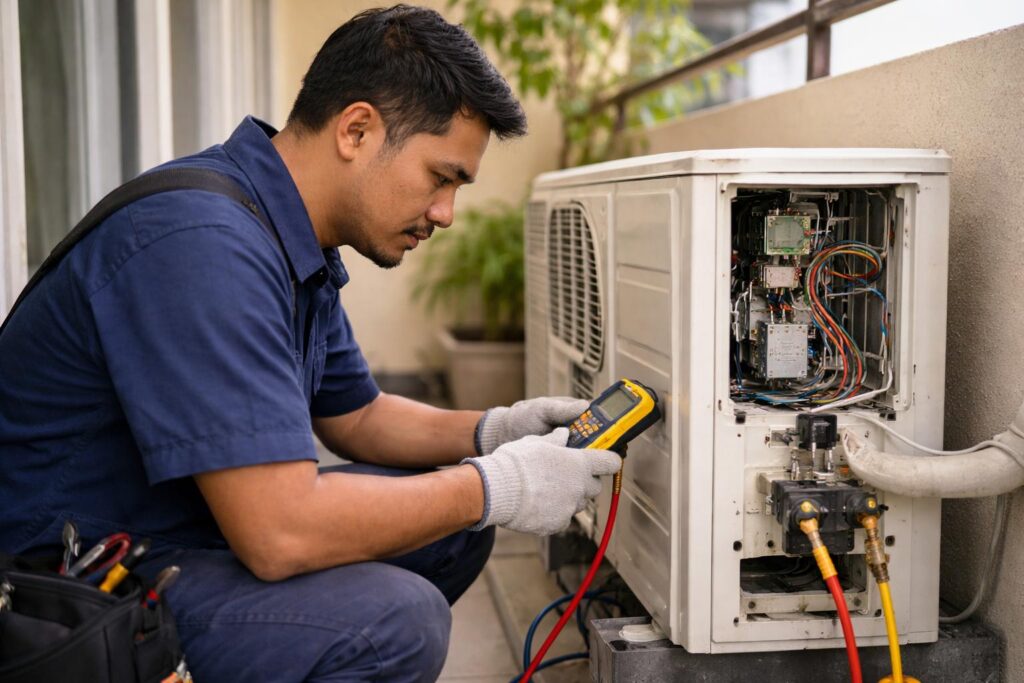
Aircond not cold
Common patterns include cold for 10–15 minutes then warm, cold at night but weak in the afternoon, or fan blows but air feels room temperature.
What usually helps is checking airflow first (filters, blocked vents, dirty coil signs). If airflow is good, then investigate patterns consistent with gas leak, thermostat sensor issue, or outdoor heat rejection issues. For non-inverter units, a capacitor problem can cause weak compressor start or unstable running. For inverter units, intermittent control issues may point toward a PCB board fault pattern that needs proper testing.
Aircond leaking water
Common patterns include dripping from the indoor unit panel, leaking only during high humidity or after long runtime, or water staining near trunking.
What usually helps is clearing a drain pipe clogged condition, checking drain slope and drain pan alignment, and identifying insulation gaps that cause condensation drip. If icing happens before the leak, the “leak” may be meltwater from freezing up.
Aircond noisy
Common patterns include rattling when fan speed changes, buzzing/humming from the outdoor unit, or clicking during start/stop cycles.
What usually helps is checking fan blade imbalance, loose mounting, and fan motor problem signs. Vibration transfer from mounting can also create “false alarm” noise. Electrical buzzing should be checked rather than ignored.
Aircond smells bad
Common patterns include musty smell when turned on, sour smell after shutdown, or worse smell during rainy weeks.
What usually helps is addressing bio-growth around the coil and drain pan area, and drain line stagnation that pushes odor back. If the smell is burning/electrical, stop using the unit and treat it as a safety issue.
Aircond freezing up
Common patterns include ice on copper pipe/indoor coil, airflow dropping over time then becoming warm, and leaking increasing after shutdown when ice melts.
What usually helps is fixing airflow restriction first. Refrigerant undercharge from a gas leak can also trigger freezing. A thermostat sensor issue can keep the coil too cold and cause repeated icing.
Aircond trips breaker
Common patterns include tripping at startup, tripping after 5–20 minutes, or tripping during hot afternoons.
Startup trips often need proper start-load checks. Runtime trips can be overheating, compressor strain, fan issues, or wiring problems. For inverter units, protection trips can be linked to PCB board fault patterns and need competent diagnosis. Don’t keep resetting repeatedly.
Gas leak
Common patterns include gradual loss of cooling over weeks/months, unusual frosting patterns, and sometimes oily residue near joints.
What usually helps is leak detection and repair at the leak point rather than repeated top-ups. Verification quality matters more than speed.
Component faults quick signals
- Capacitor problem (non-inverter): hard starts, humming, unstable compressor start (confirm with testing)
- Fan motor problem: poor airflow, overheating trips, noisy fan behavior
- PCB board fault (inverter): intermittent shutdowns, odd start-stop cycles, unstable operation
- Compressor problem signs: abnormal sound, repeated trips, poor cooling even when basics are confirmed (verify carefully)
Mistakes to avoid
- Treating every “not cold” as gas top-up (many cases start with airflow or drainage)
- Ignoring early breaker trips (electrical issues tend to worsen)
- Cleaning without checking drain slope and drain pan condition (leaks can appear after)
- Accepting “change PCB” for inverter units without verification (ask what tests support it)
Pre and post checklist
Before you call
- Confirm the exact symptom: not cold, leaking water, noisy, smells bad, freezing up, trips breaker
- Note when it happens: startup, after __ minutes, afternoon only, rainy days, nightly
- Identify inverter or non-inverter and roughly how long it has been used
- Take two photos: indoor unit front + outdoor unit area if accessible
After repair or service
- Confirm stable cooling after 20–30 minutes
- Ensure drainage is flowing properly with no indoor drips
- Listen for new vibration or noise
- Ask what to watch for in the next 7 days (recurrence signs)
Decision Tree: What to do if
If your aircond is not cold
- If airflow is weak, check filters and blockages first
- If airflow is strong but still warm, suspect gas leak/sensor/outdoor heat rejection patterns and book diagnosis
If your aircond is leaking water
- If it’s sudden and heavy, stop the unit, protect the area, and book inspection
- If it happens after long runtime, look for freezing signs and suspect drainage restriction or icing meltwater
If your aircond trips breaker
- If it trips more than once, stop using it and call for checks
- If it trips only at startup, ask for proper electrical and start-load checks (especially non-inverter)
If your aircond freezes up
- If you see ice, turn it off and let it thaw (don’t keep running it)
- If it repeats, suspect airflow restriction or gas leak patterns and book diagnosis
Verification Checklist
- Was airflow and coil condition checked before suggesting gas-related work?
- If gas leak suspected, where is the likely leak point and how was it tested?
- If recommending capacitor/fan motor/PCB, what symptom checks supported it?
- What should change immediately after the fix (cooling stability, noise, drainage flow)?
- What is the next step if the symptom returns soon?
FAQs
Not cold, leaking water, noisy operation, bad smells, freezing up, and breaker trips are the most common, often made worse by humidity and long runtimes.
No. Airflow restriction, dirty coil, thermostat sensor issue, capacitor problem (non-inverter), or outdoor unit heat rejection problems can feel like low gas.
Night usage tends to run longer and humidity effects are stronger. Drain pipe clogged issues, slope, or drain pan alignment problems are common.
If it’s already icing, thaw it first. Then address airflow restriction and check for gas leak patterns or sensor control issues.
Overcurrent from struggling components, overheating, wiring issues, or inverter protection events can cause trips. Intermittent trips still need checks.
Non-inverter units may show hard starting and humming, but confirmation requires testing rather than guessing.
Repeated trips, abnormal sounds, and poor cooling even after basic checks can be signs, but it must be confirmed carefully.
Humidity can cause deeper contamination around the coil and drain pan, or stagnant drain issues. Sometimes targeted deep cleaning is needed.
Usually yes because electronics and control boards are involved. Diagnosis quality matters to avoid unnecessary PCB replacement.
Often airflow drops due to icing or the system struggles under load. It can also match refrigerant or sensor patterns. Timing is a key clue.
Drain pan seating, drain slope, or loosened debris that later blocks the drain can cause post-service leaks. It should be checked properly.
If breaker trips repeatedly, you smell burning/electrical odor, water is leaking heavily, or icing keeps returning, stop and book inspection.