

24-Hour Arrival Guarantee
Get Fast Aircond Service, WhatsApp Us And Book In Just 5 Minutes

Professional Service
CIDB Certified Technicians

No Hidden Costs
Clear Transparent Pricing

Cheapest Aircond Service
Insanely Iow Prices For Aircond Installation And Servicing In Malaysia
Guaranteed Arrival Within 24 Hours!
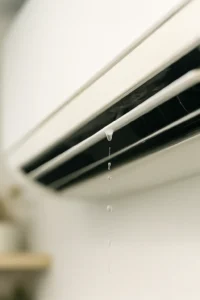
Aircond Leaking Water
Aircond Is Running But Not Cold
Noisy Compressor, Not Running
Not Cold? Get the Cheapest Aircond Installation & Aircond Service in Malaysia!
The most value-for-money aircond installation and servicing in Malaysia. 4-Hour Express Service.
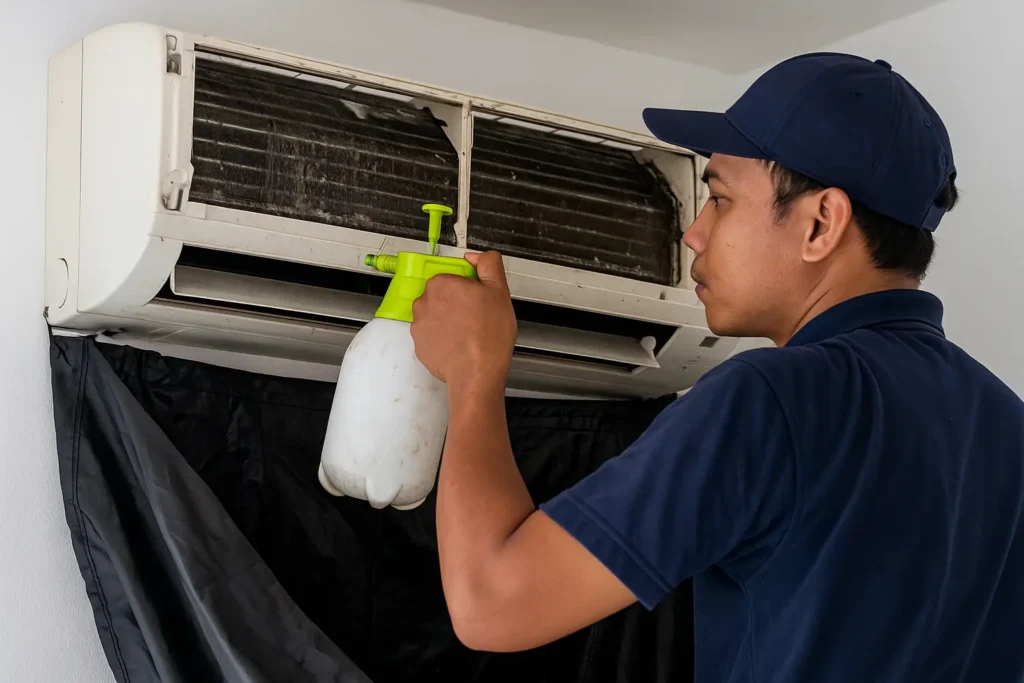
Aircond Service Malaysia
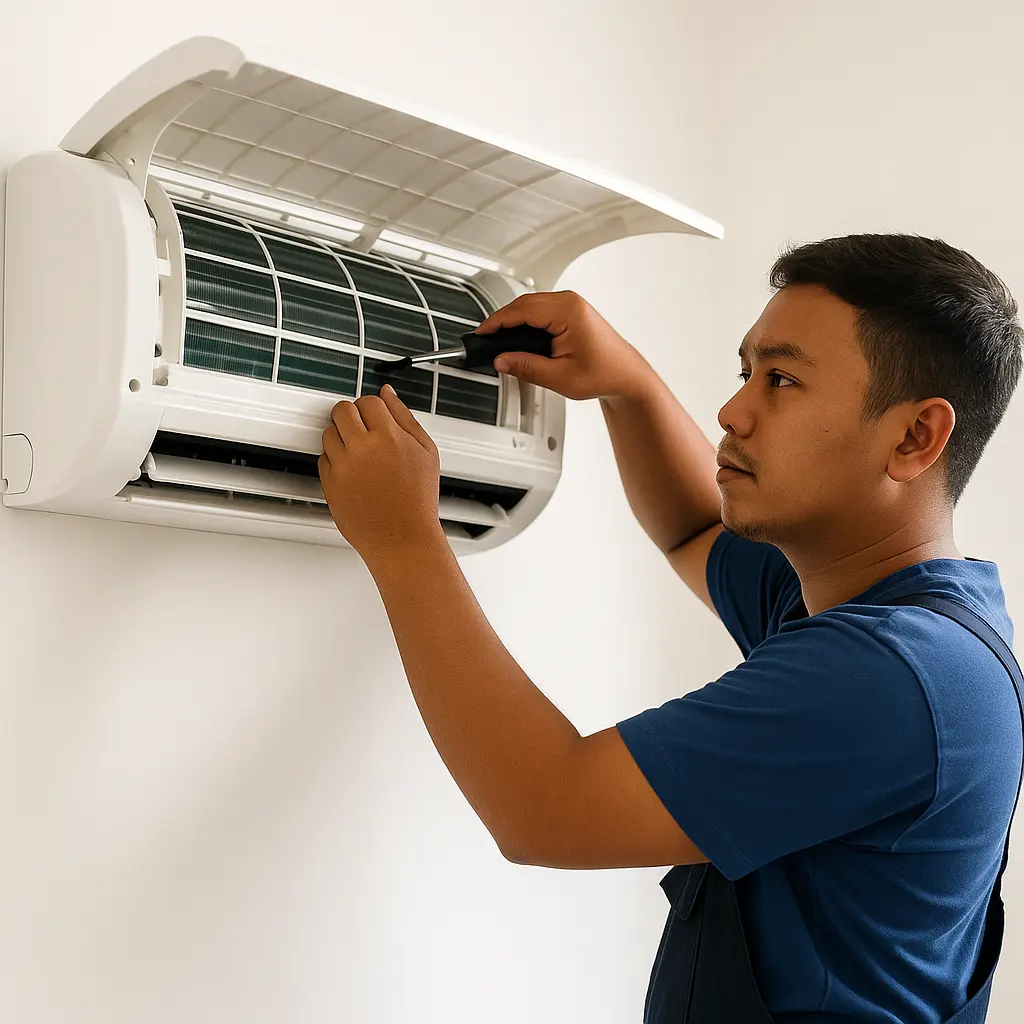
Aircond Installation Malaysia
Free 10 feet of copper pipe
Other Aircond Services Malaysia
4-Hour Express Aircond Installation & Service Malaysia. Same-day service available
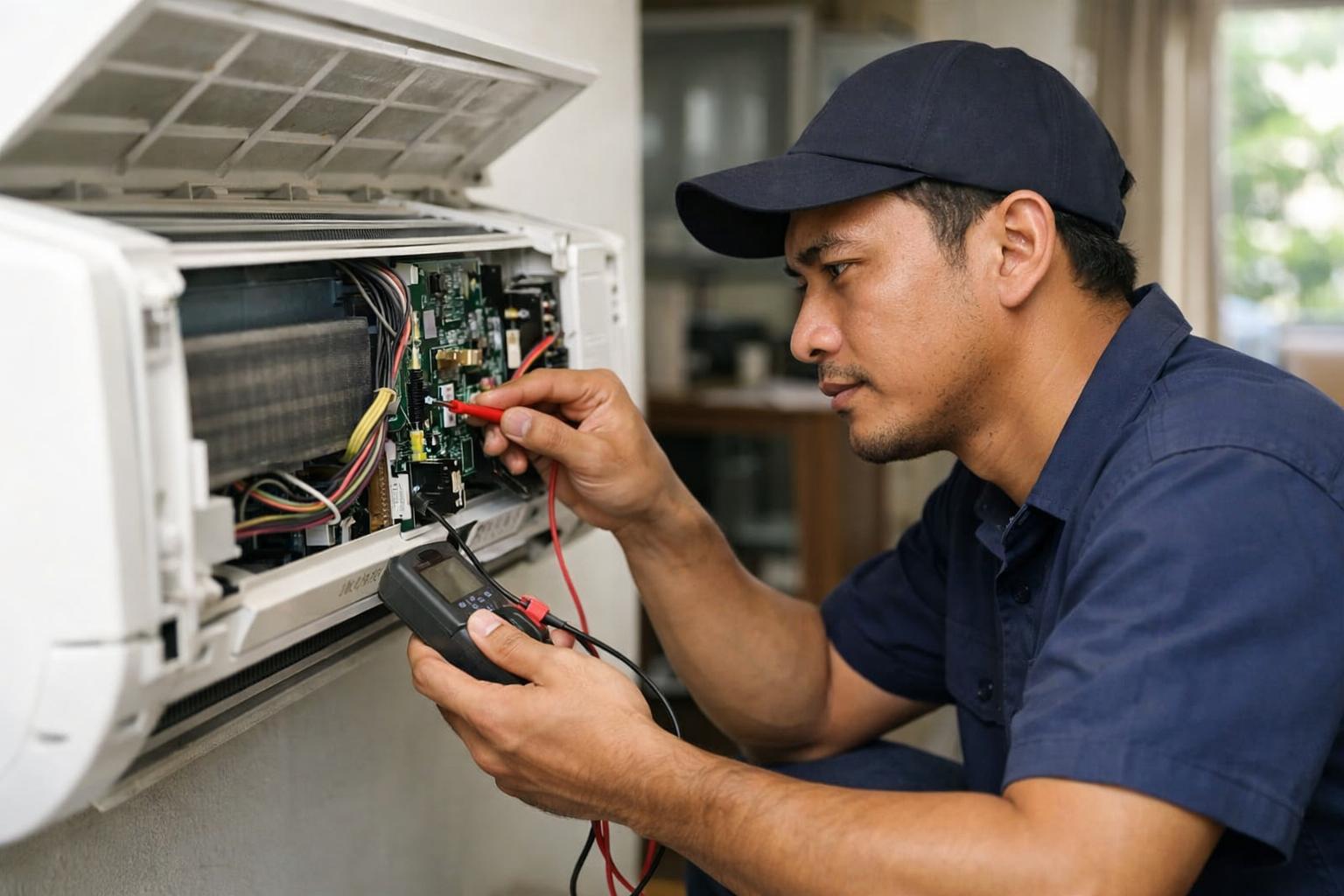
Aircond PCB / Board Fault: Symptoms, Fixable vs Replace
Direct answer (40–60 words)
An aircond PCB/board fault usually shows up as power/control problems: the unit won’t turn on, keeps shutting off, trips the breaker, or throws error codes even when basic things look fine. But many “board-looking” symptoms are actually wiring, sensor, capacitor, or communication issues—so the key is proper diagnosis before deciding repair vs replace.
Quick answer section (2–3 short paragraphs)
Think of the PCB/board as the aircond’s “traffic controller.” If it can’t power components correctly or read sensors properly, the unit may behave randomly—on/off cycles, blinking lights, or no response to the remote. On inverter systems, there’s often more than one board involved (indoor/outdoor), plus communication between FCU and ODU.
A board can be “repairable” when damage is localized (for example, a failed component on the board) and the rest of the system is stable. Replacement is more likely when the board is badly burned, heavily corroded, repeatedly fails after repair, or the correct replacement part is still available and safer long-term.
Before anyone says “it’s definitely PCB,” you want a quick elimination path: power supply, wiring/terminals, sensors, capacitor (where applicable), and communication checks—because these can mimic board failure.
Soft CTA near top (contextual)
If you’re seeing blinking lights, error codes, or the unit won’t power on, WhatsApp/Call with the brand + model (if known) and what the lights/code do. That helps triage whether it’s likely a board, wiring, or sensor issue before a visit. For a full troubleshooting workflow beyond PCB symptoms, get a proper diagnosis-first visit.
Trust section (why local expertise matters)
In Malaysia, PCB problems are often triggered by environmental stress: humidity, condensation, ants/insects, and unstable power events. Condo and high-rise setups can add extra variables—longer cable runs, shared electrical loads, and access constraints that can delay proper testing. A technician who’s used to diagnosing board faults locally will follow a repeatable elimination checklist instead of jumping straight to “replace the board.”
Service overview (what it is / who it’s for)
This guide is for homeowners, tenants, and small offices who want to understand:
- common PCB/board fault symptoms,
- what can look like a board issue but isn’t,
- when board repair can make sense,
- when replacement is the safer call,
- what a proper inspection should include.
Types of services (if relevant)
- Board-fault triage (symptom pattern + error code reading)
- Power and terminal checks (indoor/outdoor)
- FCU–ODU communication checks (especially inverter)
- Sensor and protection-circuit checks
- Board repair evaluation vs replacement decision
Step-by-step process
- Confirm symptom pattern: won’t start, trips, random shut-off, blinking/error code.
- Check power supply path: isolator, breaker, voltage stability (basic verification).
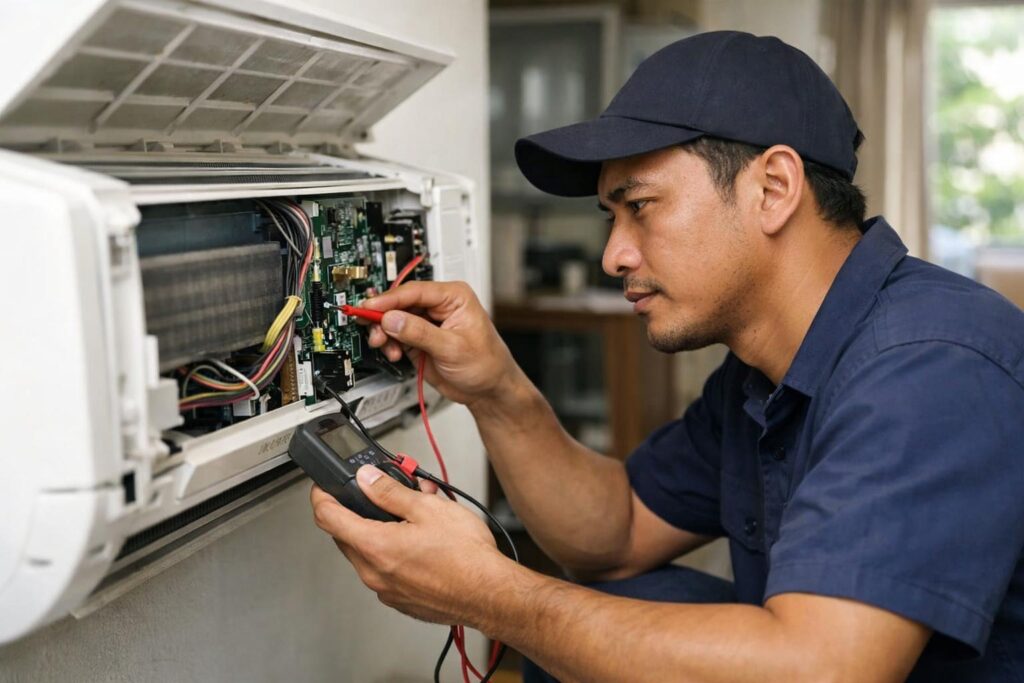
- Inspect terminals and wiring: loose connections, heat marks, corrosion.
- Check components that mimic PCB issues: sensors, capacitor (if applicable), fan motor load.
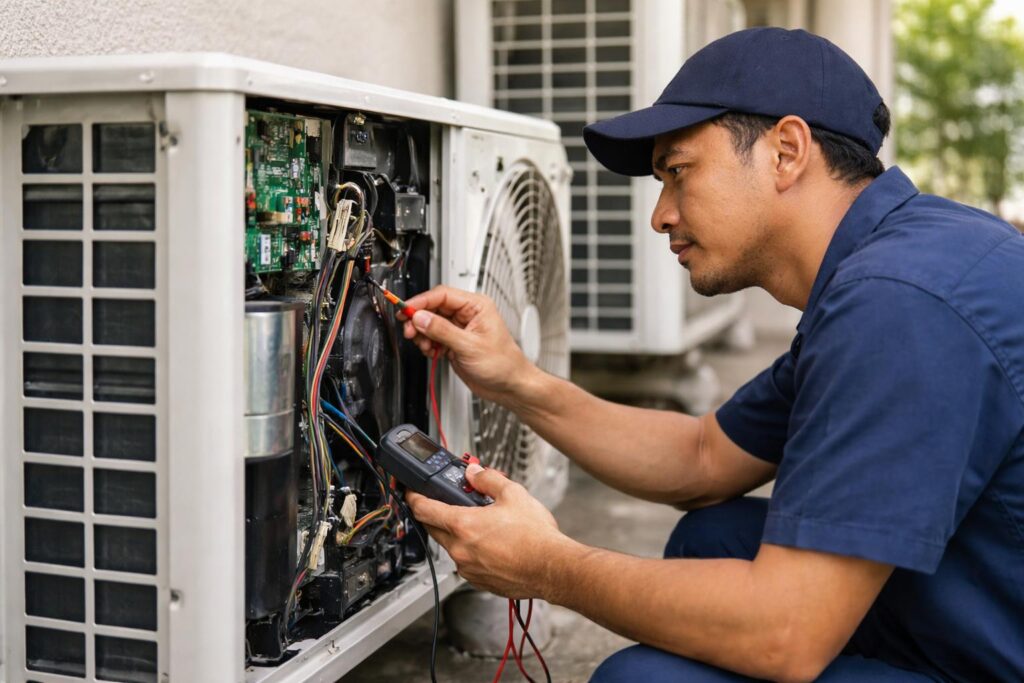
- For inverter: check FCU–ODU communication and whether the fault points to indoor or outdoor control.
- Only then: evaluate the PCB/board condition (burn marks, swollen parts, corrosion, insect damage).
- Test run and stability check after any fix (repair or replacement).
What’s included / not included (bullets)
Included
- Symptom-based triage and elimination checks
- Basic inspection of wiring/terminals and visible board condition
- Guidance on repairable vs replace decision (depends on model/condition)
- Post-fix operational testing (stability, start/stop behavior)
Not included
- Guaranteed “board is the problem” without elimination steps
- Exact pricing online (varies by model, board type, availability)
- Unsafe DIY electrical steps
Frequency / best practice guidance (by scenario)
- Condo/high-rise: reduce moisture issues—make sure drainage and surrounding area don’t cause constant condensation near control areas.
- Landed homes: keep outdoor unit area clean and ventilated; overheating can trigger protection behavior that looks like a board fault.
- Office/shoplots: long operating hours reveal intermittent faults; note whether failures happen after hours of use or during peak heat.
- Rental units: document symptoms early to avoid repeated call-outs for the wrong “fix.”
Cost factors (NO exact prices) + “what a fair quote includes” checklist
Board-related work varies because:
- inverter boards are more complex (often multiple boards)
- parts availability depends on brand/model/age
- diagnosis time can be longer for intermittent faults
- sometimes the “board” is a symptom of another issue (overload, wiring, moisture)
What a fair quote includes
- what was checked to rule out non-board causes (wiring, sensor, capacitor, communication)
- whether it’s indoor board, outdoor board, or both (if inverter)
- repair vs replacement recommendation and why
- what testing will be done after the fix (stability, restart behavior)
- any “risk notes” if the system shows signs of moisture/insect recurring risk
Common problems/symptoms + what usually helps (practical)
- Unit won’t turn on (no response): could be board, but also power path or terminal issue—elimination first.
- Blinking lights / error code: capture the pattern; often points toward communication/sensor/board area.
- Trips breaker when starting: can be overload (compressor/fan) or board short—needs safe diagnostics.
- Turns on briefly then shuts off: can be protection behavior (sensor, overheating, comms) not always the board.
- Indoor fan runs but not cold: can be outdoor control/communication, not necessarily indoor PCB.
Myths vs Facts (Unique-Only Section #1)
- Myth: “If it’s not cold, it’s always the PCB.”
Fact: Not-cold is more often airflow or gas leak/low gas; PCB is one possible cause, not the default. - Myth: “Blinking light means board is dead.”
Fact: Blinking can indicate sensors, communication, or protection triggers. - Myth: “PCB repair is always unsafe.”
Fact: Some board faults are localized and repairable—depends on condition and proper testing afterward. - Myth: “Replacing the board guarantees the problem won’t return.”
Fact: If moisture/insects/power issues remain, the new board can fail again. - Myth: “Inverter board faults are always indoor-side.”
Fact: Inverter faults can be indoor board, outdoor board, or FCU–ODU communication.
Verification Checklist (Unique-Only Section #2)
How to verify the technician truly diagnosed a PCB/board fault:
- They asked for the exact symptom pattern (when it happens, how it fails).
- They checked terminals/wiring and looked for heat marks or corrosion.
- For inverter, they checked FCU–ODU communication rather than guessing.
- They explained why it points to board vs sensor/overload.
- They showed visible board condition if relevant (burn/corrosion/insect damage).
- They confirmed stable operation after the fix (not just “it turns on”).
- They noted any root cause risks (moisture/insects/power events) and how to reduce recurrence.
Pre & post checklist
Before the visit
- Note the symptom: won’t start / blinking / trips / random shut-off.
- Take a photo of the indoor unit display/lights (if any) and remote settings.
- Observe if the outdoor unit runs at all (only from a safe distance).
After the work
- Confirm stable run (not just a 1-minute test).
- Confirm restart behavior (off/on cycle) is consistent.
- Ask what was ruled out before concluding PCB.
FAQs
No power response, blinking/error codes, random shut-offs, or tripping—especially when basics don’t explain it.
Yes. Some faults stop the outdoor unit from running properly, making it feel “not cold” even though gas isn’t the root issue.
It depends on damage level, model, and whether the fault is localized. Some boards are repairable; others should be replaced.
When there’s heavy burn damage, corrosion, repeated failures, or when the correct replacement part is available and safer long-term.
You can’t be sure without checks. Technicians look at symptom behavior, communication between FCU–ODU, and where the error points.
Could be overload (compressor/fan), wiring, or a board short. Proper elimination steps are needed before blaming PCB.
Yes, moisture and insects can cause corrosion/shorting. Preventing recurrence matters after a fix.
Yes. A bad sensor can trigger protection shut-downs and error behavior that mimics PCB failure.
No. Cleaning helps airflow and drain issues. PCB/board faults need diagnostics and electrical-side work.
Brand/model (if known), symptom pattern, any error code/blinking pattern, and whether the outdoor unit runs.
Stable run testing and restart behavior checks to ensure the fault isn’t triggered again under normal operation.
They can contribute. If the environment keeps stressing the system, board issues may repeat.