
24-Hour Arrival Guarantee
Get Fast Aircond Service, WhatsApp Us And Book In Just 5 Minutes

Professional Service
CIDB Certified Technicians

No Hidden Costs
Clear Transparent Pricing

Cheapest Aircond Service
Insanely Iow Prices For Aircond Installation And Servicing In Malaysia
Guaranteed Arrival Within 24 Hours!
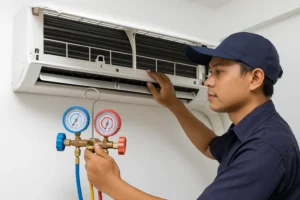
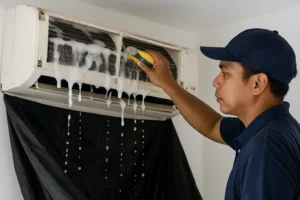
Aircond Leaking Water
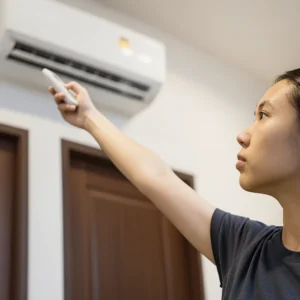
Aircond Is Running But Not Cold
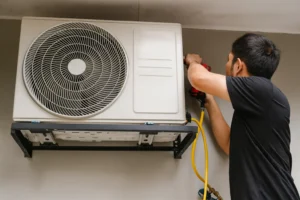
Noisy Compressor, Not Running
Not Cold? Get the Cheapest Aircond Installation & Aircond Service in Malaysia!
The most value-for-money aircond installation and servicing in Malaysia. 4-Hour Express Service.
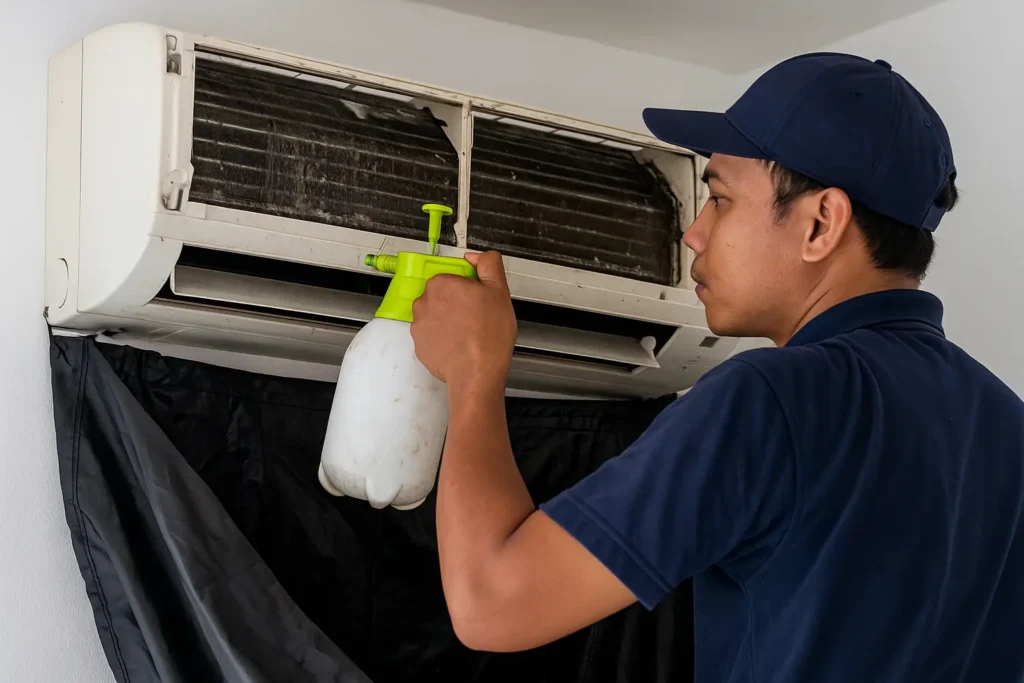
Aircond Service Malaysia
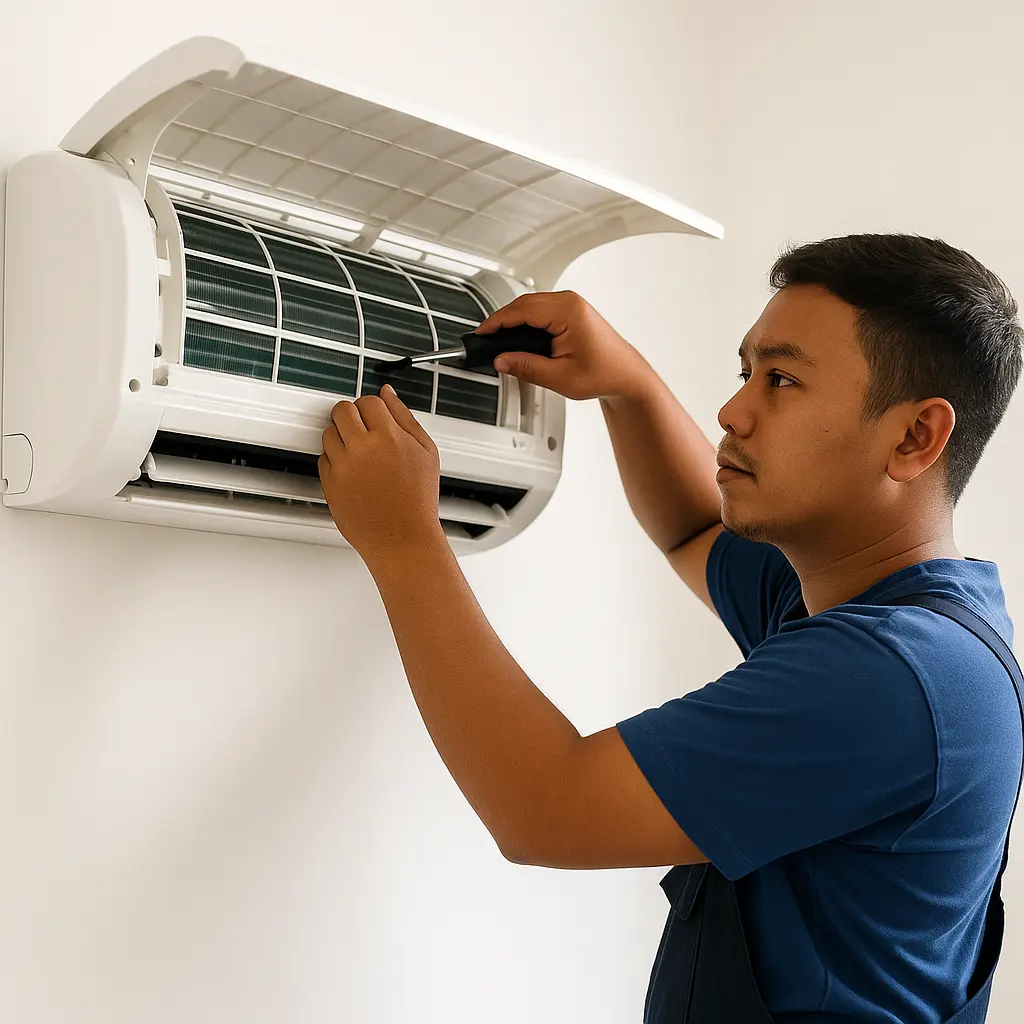
Aircond Installation Malaysia
Free 10 feet of copper pipe
Other Aircond Services Malaysia
4-Hour Express Aircond Installation & Service Malaysia. Same-day service available
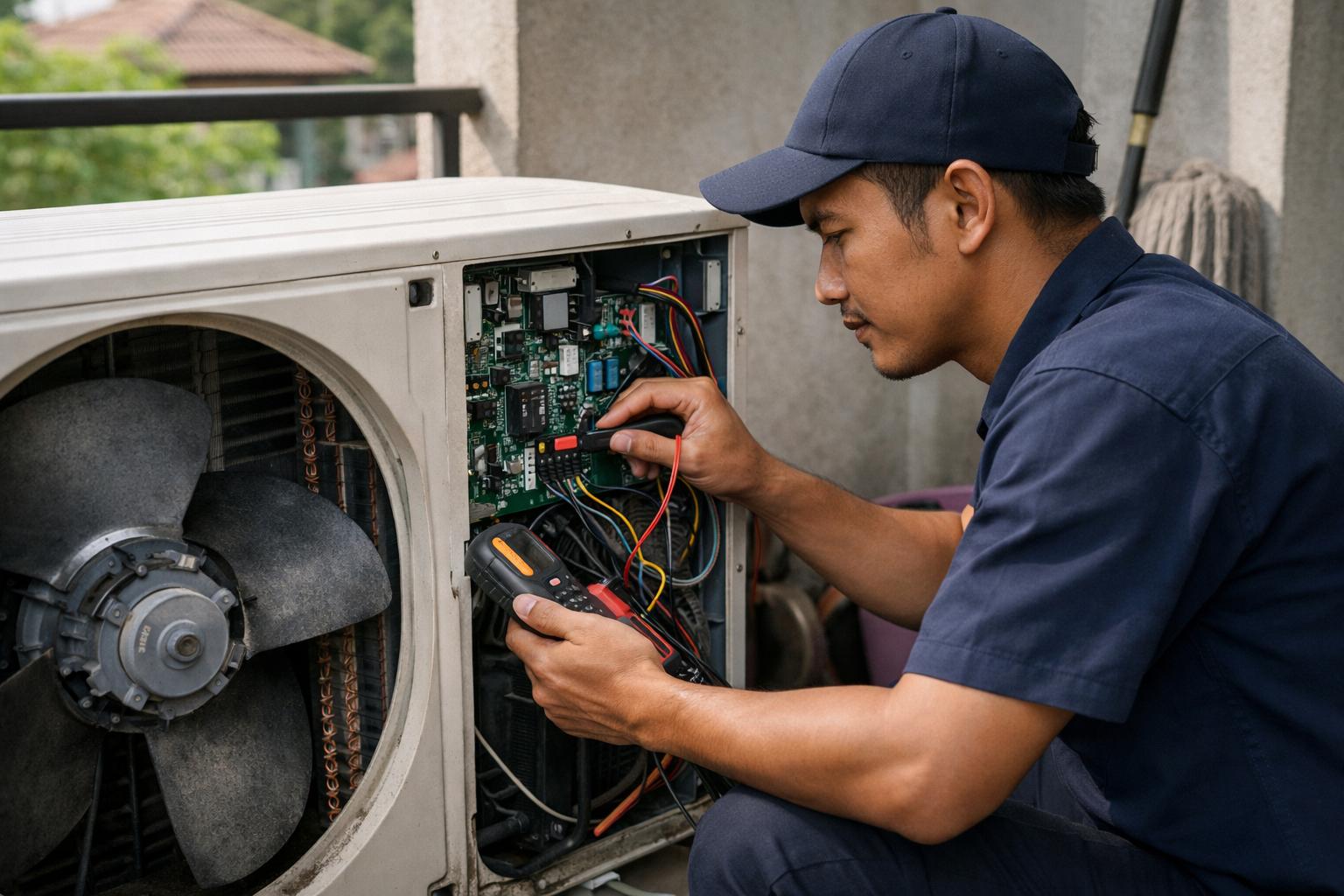
Outdoor Unit Fan Not Spinning: What It Means, Safe Checks, and Fixes (Malaysia)
Direct answer
If your outdoor unit fan not spinning, the aircon may blow room-temperature air, trip, or run noisy. Common causes include a failed capacitor, fan motor fault, stuck fan blade, bad contactor, wiring issues, or inverter/PCB control faults. Do basic safe checks first—then book an inspection if it hums, trips, or won’t start.
Quick answer
Most cases come down to three buckets: mechanical (fan blade stuck), electrical starting (capacitor/contactor), or control (PCB/inverter signals). The symptoms usually tell you which bucket you’re in.
Malaysia context matters. Heat load is high, rain bursts can cause moisture ingress, and condo outdoor units often sit in tight ledges where dust and lint build up fast—making motors run hotter and fail sooner.
Soft CTA near top (contextual)
If you can share a 10-second video of the outdoor unit starting (sound + fan area), a technician can often narrow it down quickly. WhatsApp for a quick triage and decide if you need a site inspection. Next step: get a proper diagnosis first so you don’t pay for the wrong fix.
Trust section (why local expertise matters)
Outdoor unit issues are rarely “one part fits all.” In Malaysia, condo installations often have restricted access, longer piping runs, and tight airflow around the condenser. Landed homes may face direct rain splash, gecko intrusion, or heavy dust from nearby roads and renovation work.
A local tech who understands these conditions will check the right things in the right order: airflow, starting components, electrical supply quality, and safety cut-outs—without guessing.
Service overview (what it is / who it’s for)
This support page is for situations like aircon outdoor fan not spinning, outdoor fan not working AC, ODU fan not spinning but compressor running, outdoor unit not running but indoor on, and AC not cold outdoor fan not spinning.
It’s also for people who hear the outdoor unit hum, notice tripping, or see the indoor unit running normally while the outdoor looks “dead.”
Types of services (if relevant)
Typical repair paths are short and focused:
- Outdoor unit diagnosis (electrical + mechanical checks)
- Fan motor / fan capacitor replacement (if applicable)
- Contactor / wiring repair (if burnt, loose, or arcing)
- Control troubleshooting (PCB/inverter board signal and sensor checks)
Step-by-step process (focused diagnosis flow)
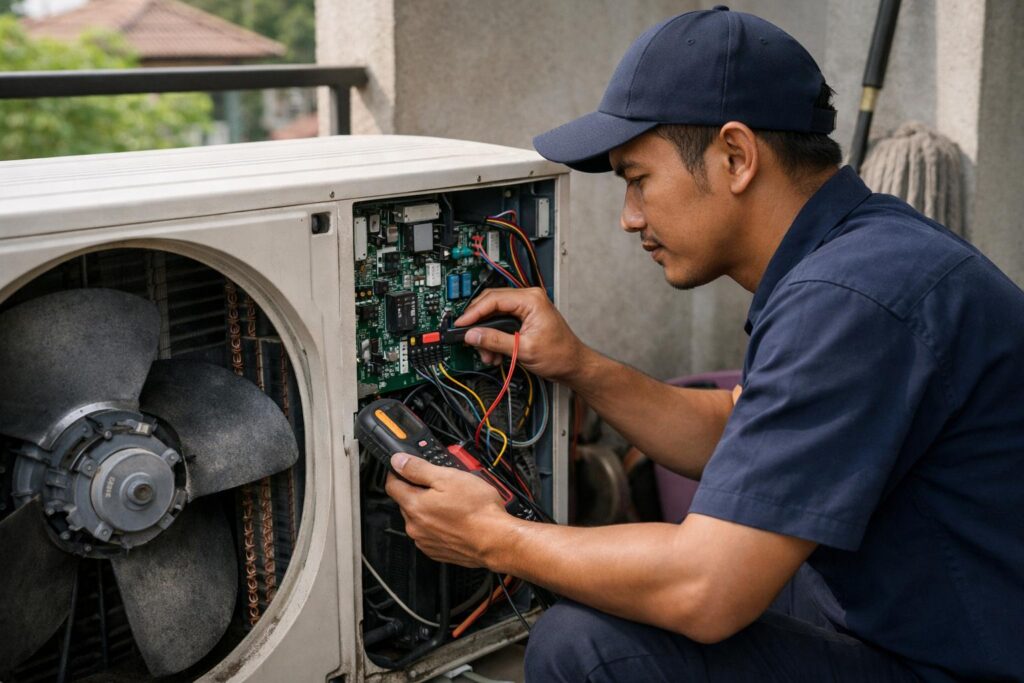
1) Confirm the symptom pattern
Does the fan never spin, spin then stop, or need a “push” to start?
2) Safety + quick visual check
Look for loose wires, burnt smell, insect/gecko debris, rusted terminals, or a fan blade rubbing the shroud.
3) Power supply and protection checks
MCB trips? Outdoor isolator loose? Condo breaker sharing heavy loads?
4) Start components check (common)
For non-inverter and some fan designs: capacitor health, contactor condition, voltage to fan.
5) Motor and fan load check
Motor bearings, shaft play, fan blade balance, airflow blockage, coil condition.
6) Control checks (especially inverter)
PCB/inverter output, sensors, error codes, and whether the outdoor is being commanded to run.
7) Test run + verify stable operation
Confirm fan start, current draw, noise level, and that cooling recovers.
What’s included / not included
Usually included
- Outdoor unit fan diagnosis (electrical + mechanical)
- Basic cleaning around the fan area to remove obvious obstructions
- Identify whether the fault is capacitor vs fan motor vs control/PCB vs wiring
- Test run after repair and confirm fan cycles normally
Usually not included (varies by site)
- Major chemical cleaning of condenser coil (if heavily clogged)
- Replacement of unrelated parts “just in case”
- Extensive rewiring beyond the outdoor unit
- Hard-to-access dismantling in condos without safe access arrangements
Frequency / best practice guidance (by scenario)
Condo ledge / service yard
Check outdoor airflow every few months. Lint + dust builds quickly in tight areas. If you notice the fan starting slower than usual, don’t wait for a full failure.
Landed (outdoor exposed to rain)
Ensure the unit isn’t getting direct splash into electrical compartments. After heavy storms, watch for tripping or humming—moisture plus weak components can show up fast.
Homes near construction or busy roads
Dust load is higher. A clogged coil forces higher pressure/temperature, stressing the fan motor over time.
Cost factors (NO exact prices) + what a fair quote includes
Costs vary by:
- Aircon type: inverter vs non-inverter
- Parts involved: capacitor vs motor vs PCB/inverter board vs contactor
- Access: condo ledge, scaffolding needs, safe working area
- Root cause: blocked airflow, electrical damage, water ingress, or long-term wear
- Time: intermittent faults take longer to reproduce and confirm
What a fair quote includes (checklist)
- Clear diagnosis statement (what failed and why it caused the fan not spinning)
- Part name + whether it’s new/reconditioned (if applicable)
- Labour scope (remove/install/test run)
- Safety checks done (wiring condition, terminals, current draw)
- What’s excluded (e.g., coil chemical wash, extra wiring, access work)
- Warranty terms explained in plain language (coverage + exclusions)
Common problems/symptoms + what usually helps (practical)
Outdoor unit humming but fan not spinning
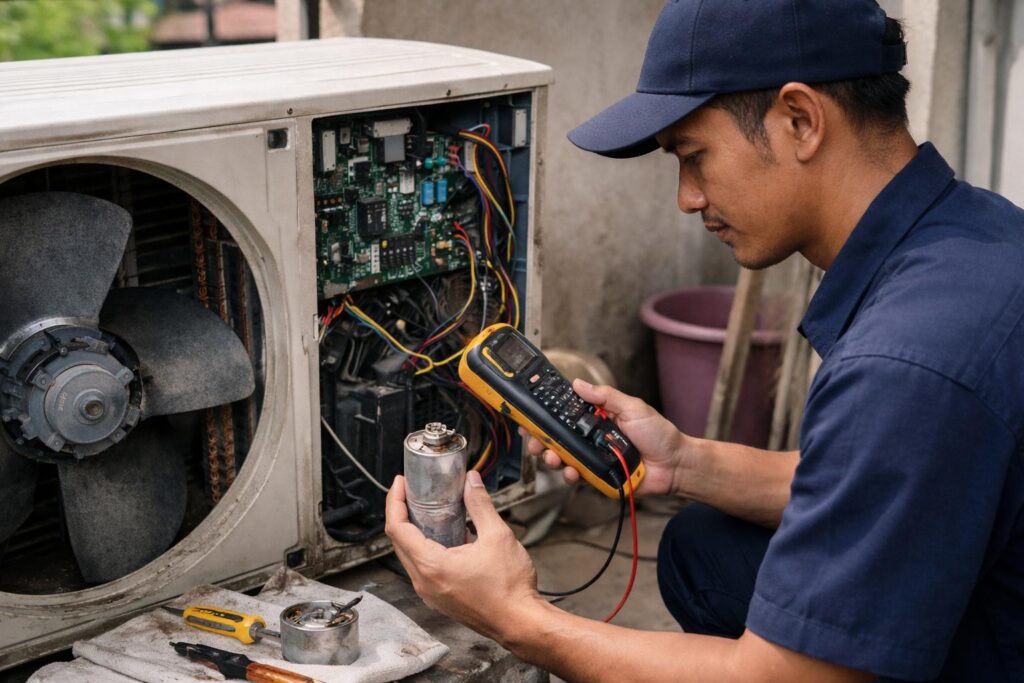
Often a start issue: weak capacitor, stuck bearing, or fan jam. If it hums, don’t keep retrying—heat builds quickly.
ODU fan not spinning but compressor running
This can happen in some fault conditions. Cooling will drop and pressure/temperature can rise. Common suspects: fan motor circuit, capacitor (if used), or control output.
Outdoor unit not running but indoor on
Indoor can run independently (blower + display). Outdoor may be blocked by protection logic (overcurrent, sensor error, PCB fault) or a power/contactor issue.
AC not cold outdoor fan not spinning
No airflow through the condenser means poor heat rejection. Many systems will protect themselves or cool very weakly.
Fan blade stuck outdoor unit
Physical obstruction (debris, warped shroud, loose screw) or seized motor bearings. This is more common after storms, gecko intrusion, or long dust buildup.
Contactor issue aircon / burnt terminals
Arcing contacts or loose terminals can drop voltage to the fan/motor. You may see black marks or smell burnt plastic.
Inverter outdoor fan not spinning
In inverter systems, the fan may be controlled by the board. The issue can be motor, board output, sensor feedback, or wiring—diagnosis needs the right test sequence.
Mistakes to avoid (tactful)
- Don’t poke the fan with a stick to “help it start.” You can damage blades or get injured.
- Don’t keep switching on/off repeatedly if the outdoor hums or trips. That stresses the system.
- Avoid DIY capacitor swaps unless you’re trained—capacitors can hold charge and wiring mistakes are common.
- Don’t ignore slow-starting fans. That’s often an early warning before a full stop.
Pre & post checklist (topic-specific)
Before calling a technician (safe checks)
- Confirm indoor is set to Cool, temperature low, fan speed medium/high
- Look at outdoor unit: any obvious debris blocking fan?
- Note what happens when you turn it on: silent / hum / trips / starts then stops
- If condo: check the outdoor isolator switch and your main breaker (only if safe and accessible)
After repair (quick confirmation)
- Fan starts smoothly within normal startup time
- No repeated humming without rotation
- Outdoor doesn’t trip the breaker during startup
- Cooling improves and stabilizes after a short run
- Noise is normal (no scraping, wobble, or rattling)
Verification Checklist (how to verify the technician actually did the work for THIS topic)
- Ask them to show the failed component evidence (e.g., swollen capacitor, burnt contactor points, seized motor feel)
- Confirm they tested fan start and stop cycles more than once (not just “it spins now”)
- Request a quick explanation: “What was the exact reason the fan didn’t spin?”
- If a part was replaced, ask for the old part back (standard practice unless warranty return is required)
- Verify they checked terminals and wiring tightness in the outdoor unit (loose terminals are common)
- Ask what they checked to rule out control faults (especially for inverter outdoor fan not spinning)
- Ensure they did a short run stability check (no trip, no abnormal noise, fan speed stable)
Common Upsells & How to Respond (topic-specific; non-accusatory)
“Must chemical wash now”
Response: “Is the coil actually clogged enough to cause high pressure or overheating? Can you show me the coil condition and explain how it links to the fan not spinning?”
“Need change PCB board aircon fault”
Response: “What tests show the board isn’t sending output to the fan/motor? Did you confirm power supply and motor health first?”
“Change compressor also”
Response: “My main symptom is the outdoor fan not spinning. What measurements indicate compressor failure, not just overheating from no fan?”
“Replace multiple parts together” (capacitor + motor + contactor)
Response: “Which part is confirmed failed, and which is preventive? Can we fix the confirmed root cause first?”
“Add gas” when the fan issue is unresolved
Response: “Let’s solve the fan problem first. Without a working outdoor fan, cooling performance and pressures won’t be reliable.”
FAQs
Indoor can run while outdoor is blocked by a power issue, contactor fault, protection logic, or control/PCB fault. The indoor blower alone doesn’t mean the outdoor is healthy.
Usually the motor is trying to start but can’t. Common reasons: weak capacitor (where used), seized bearings, or a jammed blade. Avoid repeated restarts.
It can stress the system and may trigger trips or overheating protection. If you hear humming, see tripping, or cooling drops, stop and arrange diagnosis.
Cooling is usually weak or unstable. Without airflow through the condenser, heat can’t be rejected properly. Some systems may keep the compressor running briefly before protection triggers.
Typical sign: fan struggles to start, starts sometimes, or starts then stops. A technician confirms by testing the capacitor value and circuit behavior—don’t guess-swap.
Yes. A worn or burnt contactor can drop voltage or fail intermittently. You may also see heat marks or hear chattering.
Not always. It can still be motor, wiring, sensor feedback, or board output. Proper diagnosis checks command signals and confirms motor condition.
Often related. A seized motor, shorted component, or electrical fault can cause overcurrent at startup. Don’t keep retrying—get it checked.
Avoid it. It’s unsafe and can damage blades or motor. If the fan needs “help,” the underlying issue still exists.
Describe the exact symptom pattern (hum/trip/never spins/spins then stops). Ask them to check the fan circuit, starting components, terminals, and control signals (especially inverter).
Varies by model and access. Condo ledges can add time due to safe access. A straightforward swap and test run is quicker than an intermittent control fault.
Cleaning helps if the fan is physically obstructed or airflow is severely blocked, but it won’t fix a failed motor, capacitor, or control issue by itself.