
24-Hour Arrival Guarantee
Get Fast Aircond Service, WhatsApp Us And Book In Just 5 Minutes

Professional Service
CIDB Certified Technicians

No Hidden Costs
Clear Transparent Pricing

Cheapest Aircond Service
Insanely Iow Prices For Aircond Installation And Servicing In Malaysia
Guaranteed Arrival Within 24 Hours!
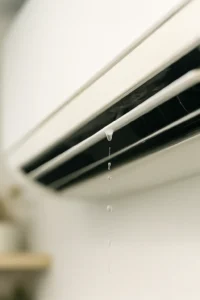
Aircond Leaking Water
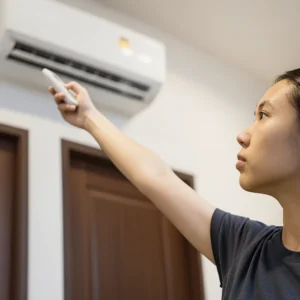
Aircond Is Running But Not Cold
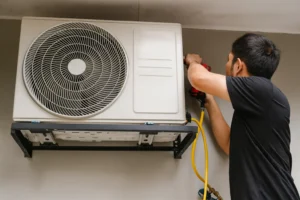
Noisy Compressor, Not Running
Not Cold? Get the Cheapest Aircond Installation & Aircond Service in Malaysia!
The most value-for-money aircond installation and servicing in Malaysia. 4-Hour Express Service.
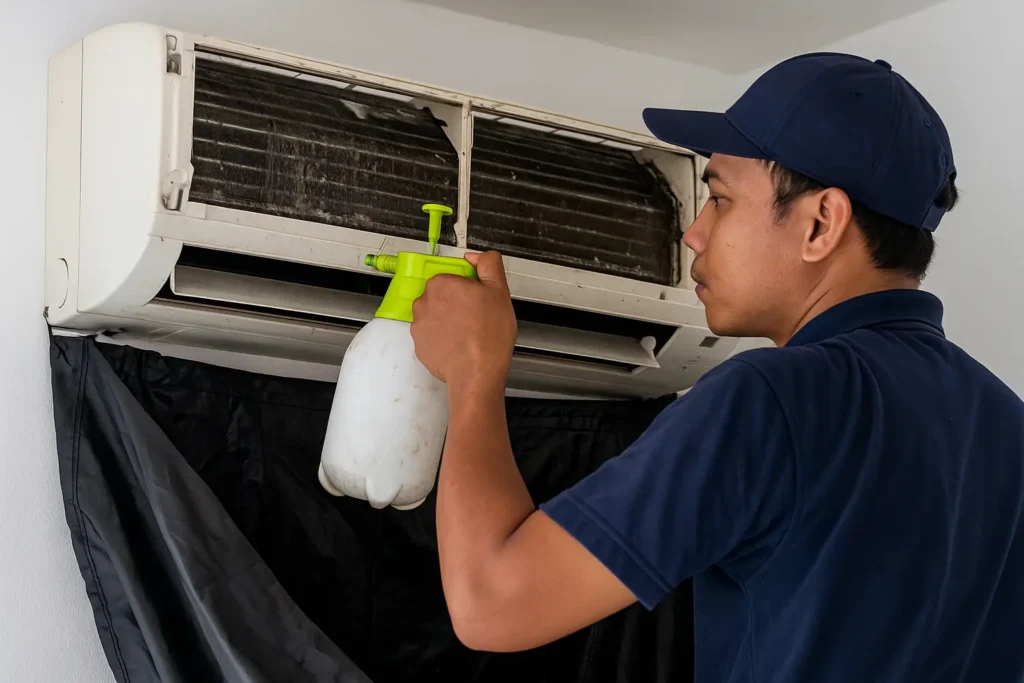
Aircond Service Malaysia
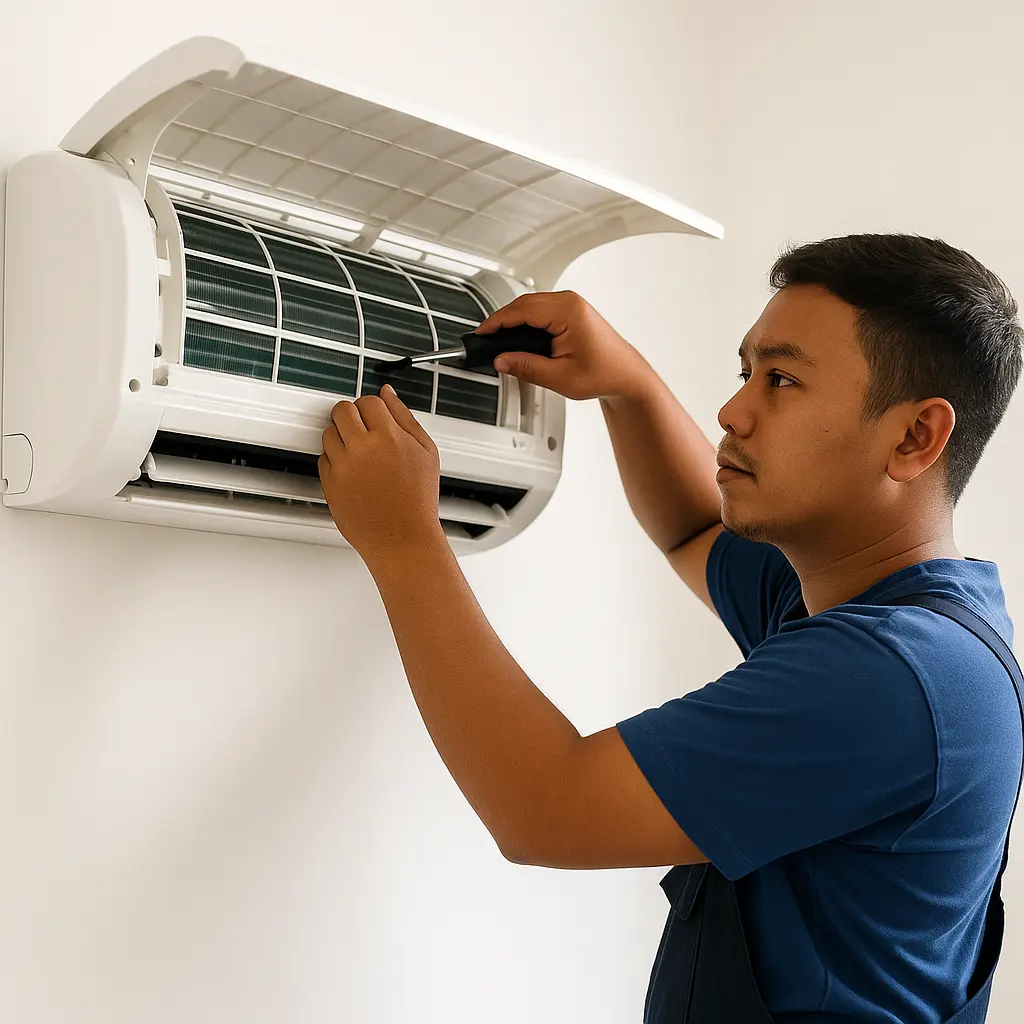
Aircond Installation Malaysia
Free 10 feet of copper pipe
Other Aircond Services Malaysia
4-Hour Express Aircond Installation & Service Malaysia. Same-day service available
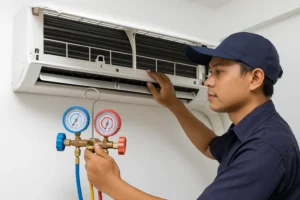
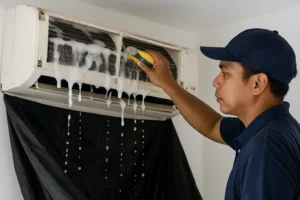
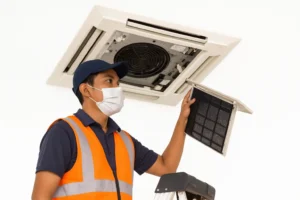
What Does Aircond Servicing Include in Malaysia?
Direct answer
Aircond servicing usually includes cleaning key airflow parts, checking drainage, basic inspection, and testing performance after cleaning. In Malaysia, a “normal service” often focuses on filter and surface cleaning, while a chemical wash is deeper (coil/blower-related) when the unit is very dirty, smelly, leaking, or still not cold.
Quick answer (scope clarity)
If you’re hiring someone and asking “what is included in aircond service?”, think: cleaning + drainage check + basic inspection + test run. That’s what most homeowners expect for routine upkeep.
What changes the scope is the condition of the unit. A lightly dusty unit may only need a normal service. But if there’s musty smell, weak airflow, water leaking, or the unit hasn’t been maintained for a long time, the technician may recommend a chemical wash because surface cleaning won’t reach the grime inside.
Also important: aircond servicing doesn’t automatically mean gas top up. Gas is usually only needed when there’s a leak or low refrigerant signs.
Soft CTA (near the top)
Not sure whether you need normal service or chemical wash? WhatsApp or call and share: your unit type (wall split), how old it is, and the symptom (not cold / smell / leak). You’ll get a quick scope suggestion before anyone comes.
Why local expertise matters in Malaysia
Malaysia homes and condos commonly deal with dust, humidity, and long daily run hours—especially in bedrooms and small offices. That combo makes drain issues, mouldy smells, and clogged coils more common than people expect. A local tech who understands these patterns won’t oversell; they’ll match the service scope to your symptoms and your unit’s usage.
Service overview (what it is / who it’s for)
Aircond servicing is routine maintenance for residential and small office wall-mounted split units. It’s for you if:
- Your aircond runs daily and you want consistent cooling and airflow
- You notice mild dust smell, slightly weaker airflow, or occasional dripping
- You want to reduce the chance of sudden “not cold” breakdowns during hot periods
- You’re managing rentals and want predictable upkeep between tenants
Types of services (short)
- Normal service: basic cleaning + drainage check + inspection + test
- Chemical wash: deeper cleaning for internal coil/blower areas when dirt is stubborn or symptoms persist
- Troubleshooting visit: focused diagnosis for “not cold,” noise, leaking, or repeated trips (may lead to parts repair)
Step-by-step process (practical, non-risky)
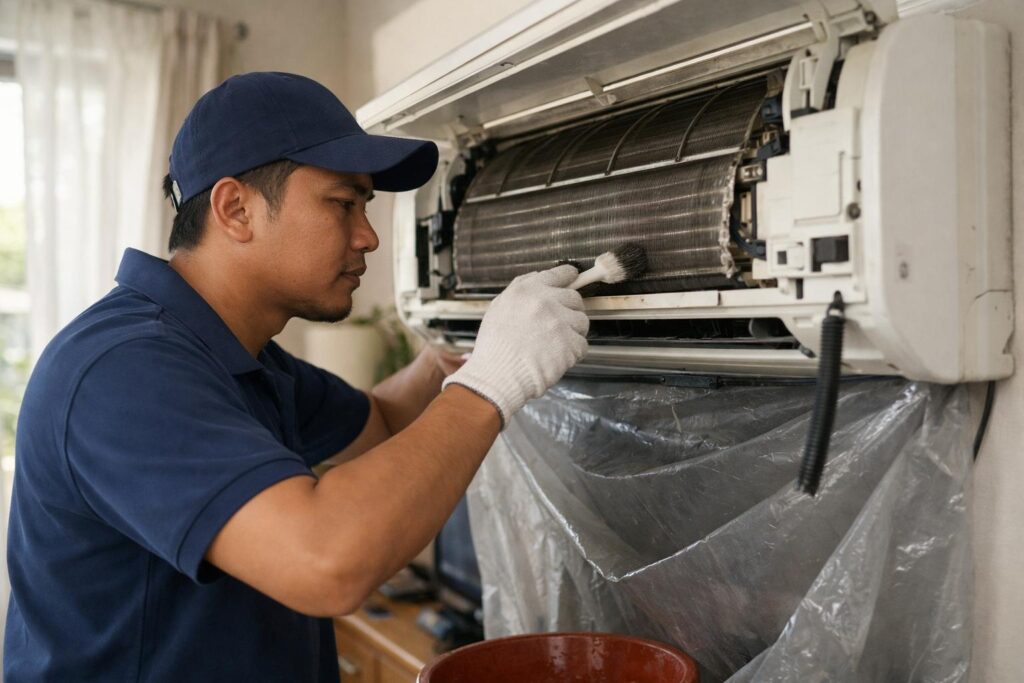
A proper aircond servicing visit typically follows this flow:
1) Quick symptom check
The technician asks what you noticed (not cold, smell, leak, noise) and how long it’s been happening.
2) Protect the area
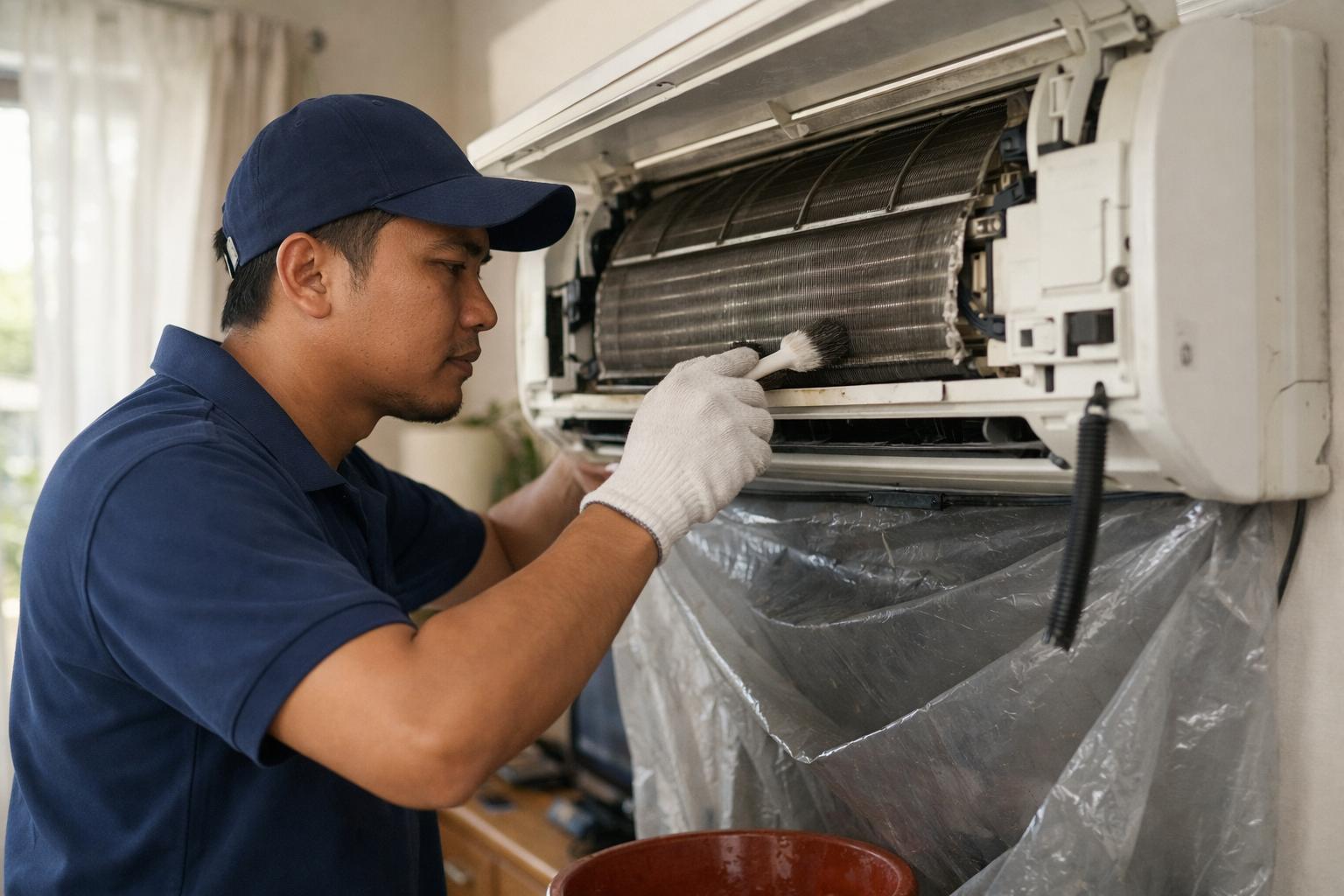
They cover the floor and nearby furniture under the indoor unit to avoid mess.
3) Open and inspect the indoor unit
They check for dust build-up, tray condition, and obvious airflow blockage.
4) Aircond filter cleaning
Filters are cleaned and checked for damage or heavy clogging.
5) Coil cleaning (indoor unit)
They clean surface grime on the indoor coil/fins. How deep this goes depends on the service type and condition.
6) Drain pipe flushing
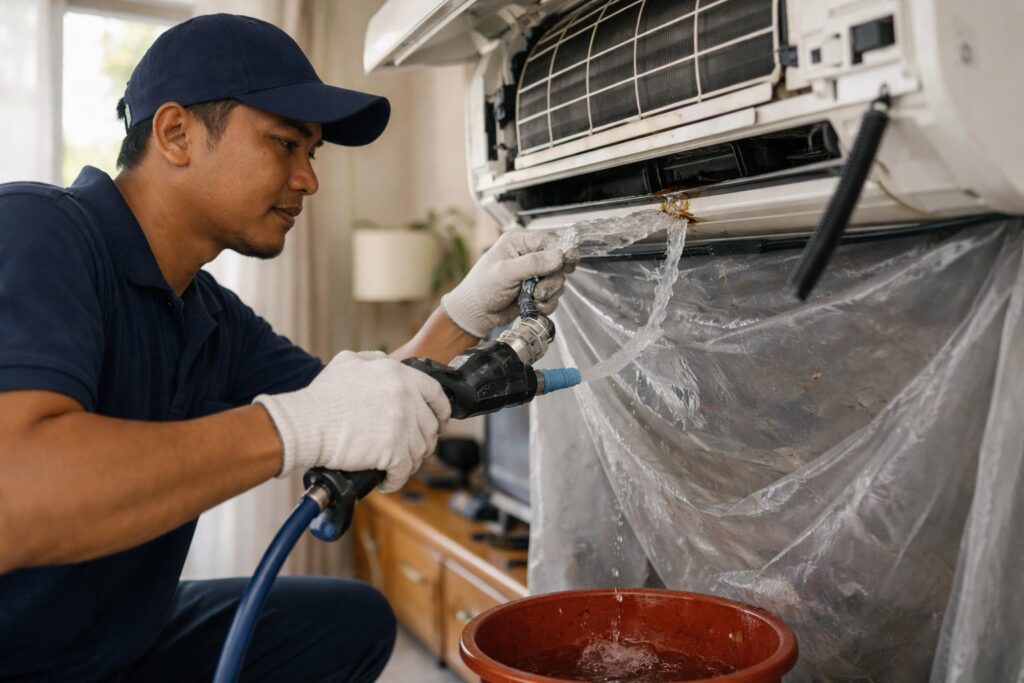
They clear slime/clog to reduce leaking and odour issues.
7) Outdoor unit check
A basic inspection for debris, airflow, and obvious issues.
8) Test run and explain findings
They test cooling, airflow, drainage, and noise, then explain what was done and what to monitor.
What’s included (and what’s not) — main focus
Typically included in a normal aircond service
- Basic inspection of indoor unit condition (dust, moisture, obvious wear)
- Aircond filter cleaning (wash/clean)
- Coil cleaning (indoor unit) (surface cleaning; not always deep dismantle)
- Drain tray check and drain pipe flushing to reduce leaking
- Blower area light cleaning if accessible (depends on model/condition)
- Outdoor unit basic check (airflow, debris around fins, general condition)
- Test run: cooling feel, airflow strength, drainage, unusual sound check
- Simple advice: maintenance frequency and warning signs to watch
Often not included (unless stated)
- Chemical wash (deeper dismantle/soak process)
- Full blower removal/strip-down (some models require more labour)
- Refrigerant/gas top up “by default”
- Repair work (capacitor, fan motor, PCB, sensors, leaks)
- Chemical treatment for severe mould (varies by method and condition)
- Deep cleaning of outdoor unit coil (some include light rinse, some don’t)
- Extended troubleshooting time for complex faults (may be a separate diagnostic scope)
What does chemical wash include (plain terms)?
Chemical wash usually means deeper cleaning to remove stubborn grime that blocks heat exchange and airflow. Depending on unit type and condition, it may include:
- More thorough indoor coil cleaning and rinsing
- Deeper cleaning around blower wheel area
- Drain system cleaning to remove slime build-up
- Longer flushing and re-checking after reassembly
Exact steps can vary by technician method and unit model.
Frequency guidance (by scenario)
How often to service aircond in Malaysia depends on usage and environment:
Condo (daily bedroom use)
- Routine service: generally every few months if run nightly
- Watch for: musty smell, weak airflow, water drip signs
Landed home (more dust from outdoors)
- Routine service: similar cadence, but dust may build faster in rooms near windows/porch
- Watch for: filters clogging quickly, airflow drop
Small office (long daytime hours)
- Routine service: more frequent if units run 8–10 hours/day
- Watch for: complaints of “not cold,” uneven cooling, increased noise
Rental unit (between tenants)
- Service before handover and whenever symptoms appear
- A “looks clean” unit can still have drain slime causing leaks later
Rule of thumb: if airflow or smell changes noticeably before your usual schedule, don’t wait—scope may need to shift from normal service to deeper cleaning.
Cost factors (no exact prices) + fair quote checklist (short)
What affects service cost is mainly scope and condition, not the brand name: see what a fair quote includes before you book
- Normal service vs chemical wash depth
- Number of units and accessibility (tight ledge, high wall)
- Severity of clogging/leaking/mould smell
- Time needed for dismantle and flushing
What a fair quote (scope clarity) should include
- Clear label: normal service / chemical wash / troubleshooting
- What parts are cleaned (filters, indoor coil, drain, blower area)
- Whether drain flushing is included
- Whether outdoor unit is checked/cleaned and to what extent
- Whether gas top up is included only if needed (with symptom explanation)
- Post-service testing (airflow/cooling/drain) and what to monitor
Common problems/symptoms + what usually helps
Aircond leaking water
Often drainage blockage; drain pipe flushing + tray check helps.
Musty smell
Commonly drain slime or damp dust inside; deeper cleaning may be needed.
Weak airflow
Dirty filters/coil; cleaning helps, and sometimes blower cleaning matters.
Aircond not cold after service
Can be low refrigerant, sensor issues, or heavy coil blockage that needed deeper wash; may require troubleshooting rather than “another basic clean.”
Noisy indoor unit
Loose panels, blower imbalance from dirt, or worn parts; cleaning may reduce noise, repairs may be separate.
Mistakes to avoid (tactful)
- Assuming every service must include top up gas (often unnecessary unless symptoms match)
- Paying for “chemical wash” without understanding what will be dismantled/cleaned
- Skipping drain flushing when leaking/musty smell is the main complaint
- Not asking for a quick before/after confirmation (photos or explanation)
- Servicing too rarely until the unit becomes severely clogged, then expecting a normal service to fix everything
Pre & post checklist (short)
Before the technician arrives
- Clear space under the indoor unit
- Note the main symptom (not cold / smell / leak / noise) and when it happens
- If possible, estimate how long since last service
- Mention if it’s a condo ledge / tricky outdoor unit access
After servicing
- Airflow feels stronger within minutes
- Cooling improves during test run
- No dripping from indoor unit after a while
- Smell reduces (some improvement may take time if it was severe)
- Technician explains what was cleaned and what remains a risk
Verification checklist (how to confirm the work was actually done)
Use this quick “proof” checklist (no awkward confrontation needed—just ask politely):
- Ask what was cleaned: filters, coil, drain, blower area, and whether outdoor unit was checked
- Ask if drain pipe flushing was done and what was found (clear / slimy / clogged)
- Ask what changed after service: airflow, cooling feel, drainage behaviour
- Request a quick photo before closing the cover (coil area / drain tray area) if practical
- Confirm test run was performed and how long they ran it
- If “gas top up” is mentioned, ask what symptom indicated low gas (not just “standard package”)
Scenario matrix (condo vs landed vs office vs rental)
Condo
- Most common needs: drain flushing, smell prevention, frequent routine cleaning
- Watch-outs: outdoor unit access limitations; scope may be adjusted
Landed
- Most common needs: faster dust build-up; filters clog more often
- Watch-outs: outdoor unit exposed to debris; airflow around condenser matters
Small office
- Most common needs: higher usage load; more frequent servicing cycles
- Watch-outs: multiple units with uneven cooling; scheduling downtime
Rental
Most common needs: handover servicing; prevent leaks after tenant moves in
Watch-outs: “looks clean” but drain slime remains; choose scope based on symptoms
FAQs
Not automatically. Gas top up is usually only needed if symptoms suggest low refrigerant or there’s a leak. Routine servicing is mainly cleaning and drainage checks.
At minimum: filter cleaning, basic indoor coil cleaning, drain check/flushing, inspection, and a test run. A proper visit also includes explaining what was done and what wasn’t included.
Filters cleaned, indoor coil surface cleaned, drain flushed, basic outdoor check, and test run. Exact depth depends on condition and unit design.
Normal service suits routine upkeep. Chemical wash is more likely when there’s persistent smell, recurring leaking, very weak airflow, heavy dirt build-up, or when normal service didn’t improve cooling.
It usually involves more thorough cleaning and rinsing of internal areas (especially coil/blower zone) plus stronger drain cleaning. The exact dismantling level depends on model and condition.
Not always. Some normal servicing only does light cleaning if accessible. Deep blower cleaning may be part of chemical wash or an add-on depending on the model and dirt level.
It varies by number of units, access, and how dirty the unit is. Normal service is usually faster; chemical wash and troubleshooting take longer.
Often yes—if the cause is a clogged drain pipe or dirty tray. If leaking is due to installation slope, cracked tray, or other faults, cleaning alone might not fully solve it.
Possible reasons include refrigerant issues, sensor problems, severe blockage needing deeper wash, or a different fault that requires troubleshooting. Ask what was tested and what symptoms remain.
Many daily-use units benefit from routine servicing every few months. If you notice smell, weak airflow, or minor dripping earlier, service sooner.
Ask what parts were cleaned (filters/coil/drain/blower area), whether drain flushing was performed, and request a quick explanation (or photo) before closing up.
Usually a basic check is included. Deeper outdoor coil cleaning may or may not be included—confirm the scope, especially if the outdoor unit is dusty or airflow is blocked.